
Last updated November 15, 2026
 Sweep & inspection
 Caps & crowns
 Flue relining
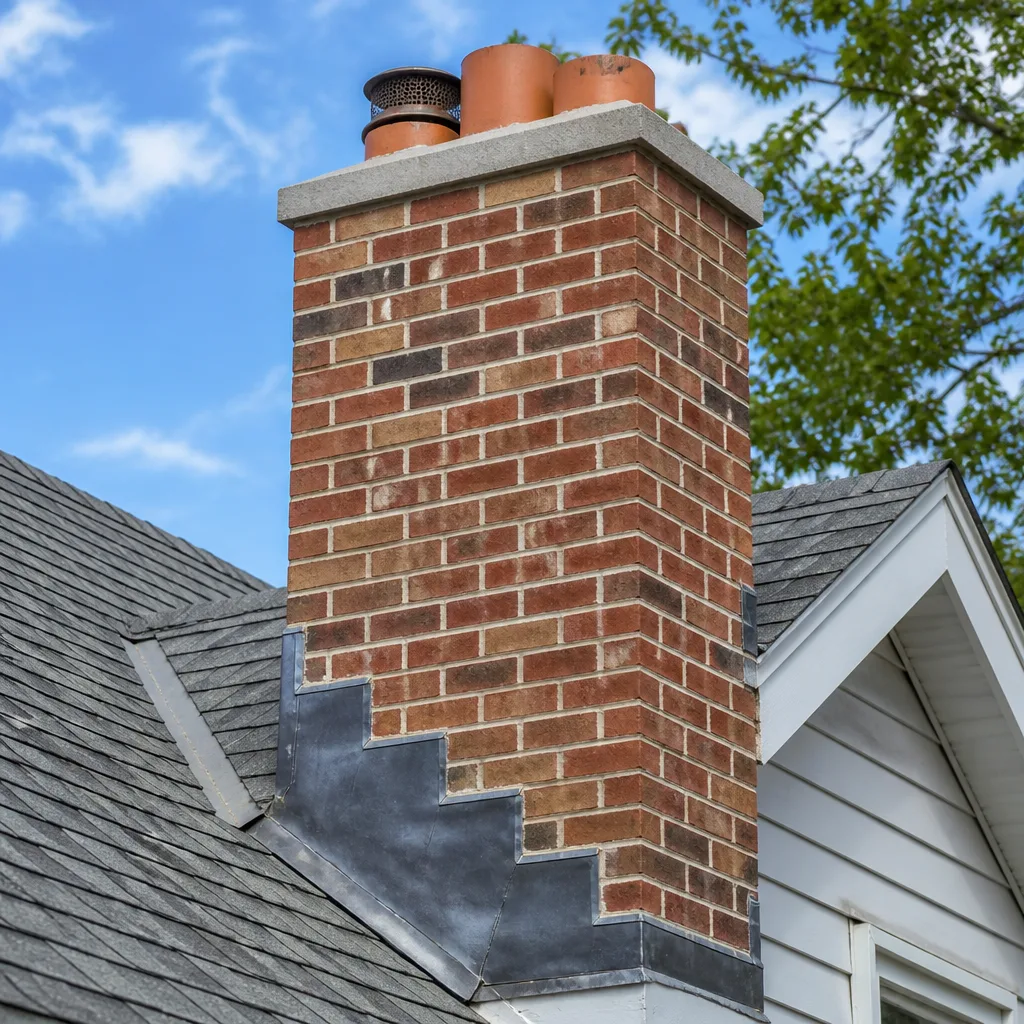 Masonry repair
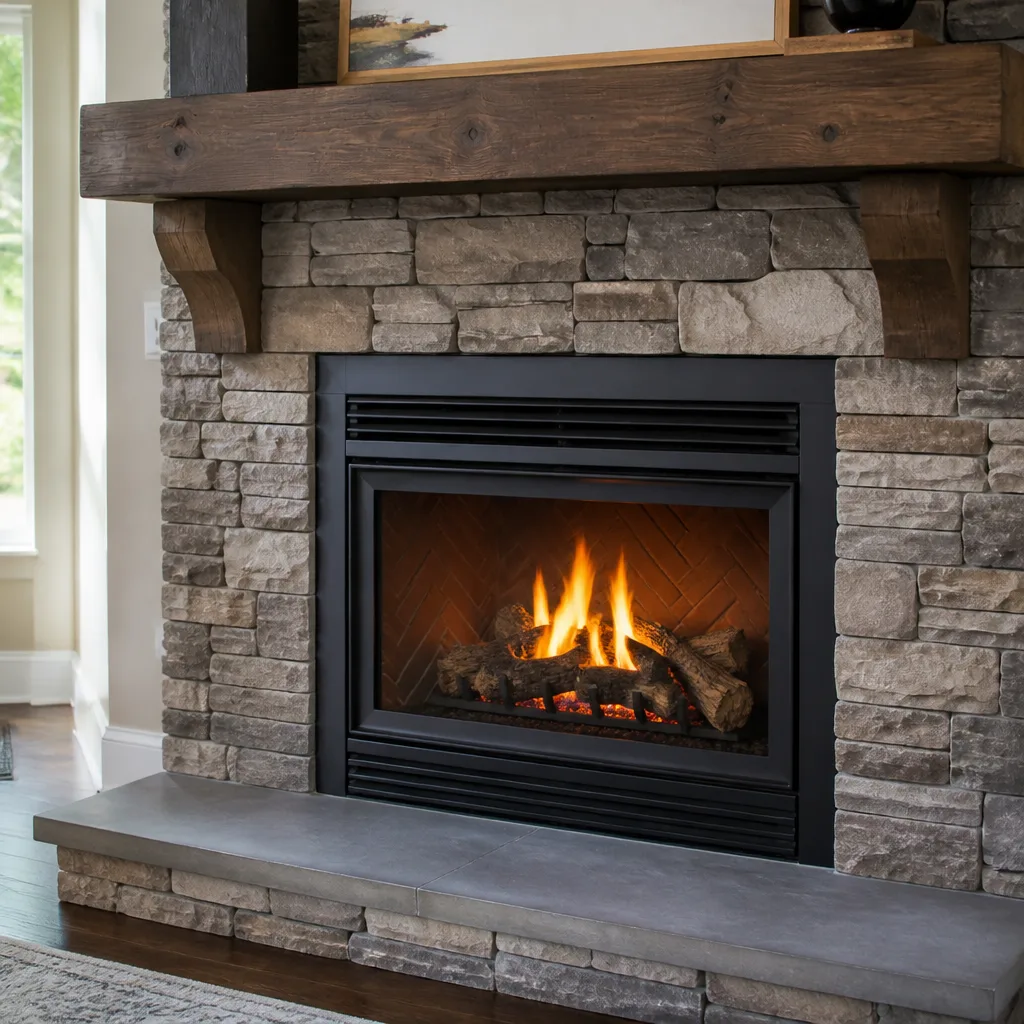 Gas fireplace service
Level 1 sweep and inspection to the NFPA 211 annual standard - flue, crown, cap, and flashing checked and photographed
Chimney sweep logs do not sweep chimneys. They loosen some creosote - which then falls where a brush and vacuum still have to collect it.
DIY vs Professional Chimney Cleaning: The Nampa Homeowner’s Decision Guide
You can sweep your own flue and do a reasonable job of it. The problem isn’t the brushing. It’s that you won’t know what you missed until it shows up as a house fire, a failed home inspection, or a carbon monoxide reading you can’t explain. Most chimney care advice splits into two camps: “do it yourself and save money” or “always hire a pro.” Neither is honest. In this guide, we draw the actual line for Nampa homeowners: which parts of chimney maintenance you can legitimately own, which parts create liability you can’t see, and how to tell which category your home falls into.
Quick Answer
A competent homeowner can handle basic flue brushing, a cap check, and exterior visual inspections with the right tools. Everything beyond that – camera inspection of the flue interior, smoke chamber parging, Stage 2 or Stage 3 creosote treatment, and any structural assessment – needs professional equipment and training. The dividing line isn’t effort. It’s whether you can see and prove what’s inside your chimney.
Styles & brands we work with
- Sweep & inspection
- Caps & crowns
- Flue relining
- Masonry repair
- Gas fireplace service
Table of Contents
- What a Competent DIYer Can Actually Handle
- What Requires Professional Equipment
- The Real Cost of DIY Done Wrong
- Insurance and Warranty Implications
- Decision Matrix: Which Category Are You In?
- Nampa Climate and Your Chimney
- Tools and Technique: What Proper DIY Looks Like
- Common Mistakes to Avoid
- When to Call a Professional
- Frequently Asked Questions
What a Competent DIYer Can Actually Handle
We’re not going to pretend every chimney task requires a license and a truck full of equipment. Some of it genuinely belongs to the homeowner, and doing it yourself is a reasonable choice. Here’s where the honest line sits.
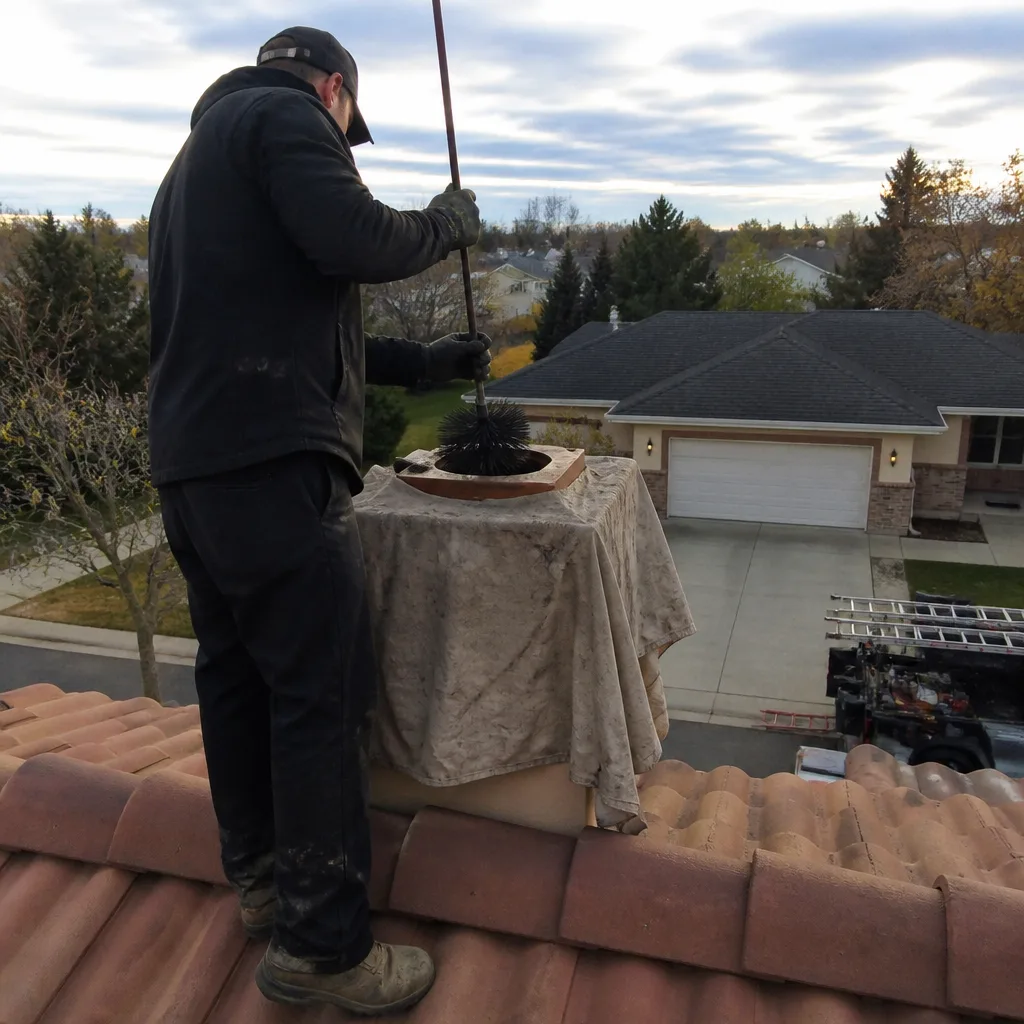
A basic flue brushing is within reach for a careful homeowner. That means running a properly sized brush through a straight flue from the top or bottom, working the brush in short strokes, and bagging the debris. You need a chimney brush matched to your flue’s shape and size (round, square, or rectangular), enough flexible rods to reach the full length, drop cloths, a shop vacuum rated for fine ash, and a respirator. The work is dusty and awkward, but it’s not complicated.
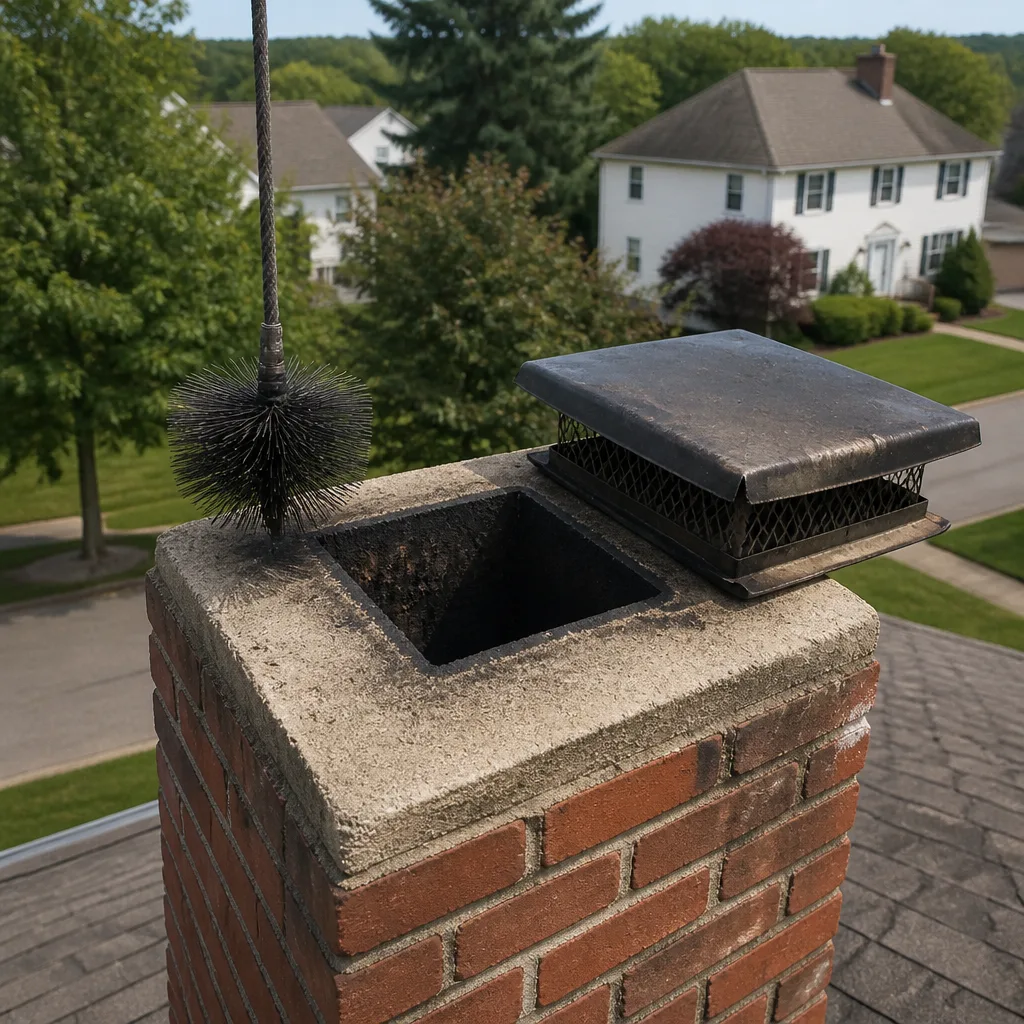
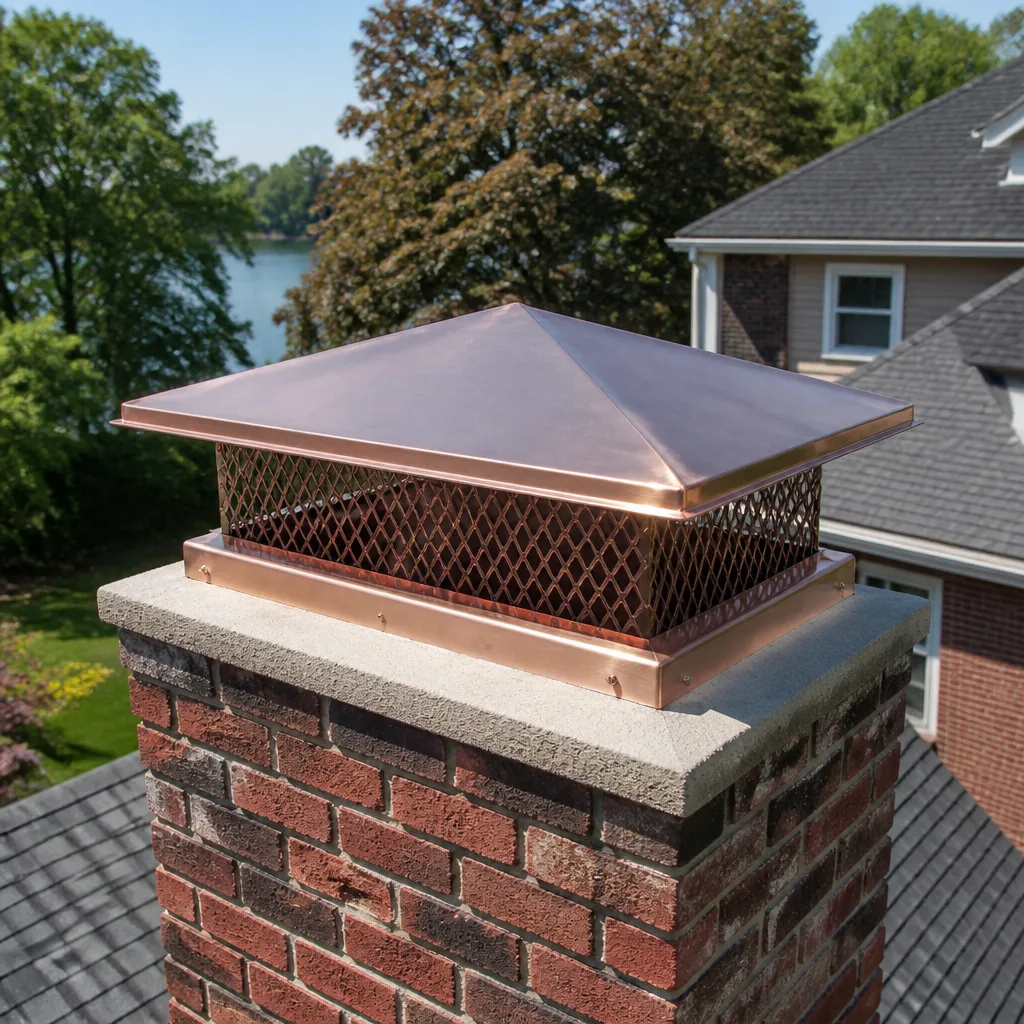
A cap inspection is also fair game. Look at the cap from the ground with binoculars, then from a ladder if you’re comfortable on one. The cap should be intact, securely attached, and free of rust-through or bird nests. A missing or damaged cap is one of the most common causes of water intrusion and animal entry in Nampa chimneys.
An exterior visual check from the ground is worth doing every season. Look for:
- Cracked or spalling brick on the chimney stack
- Deteriorated mortar joints, especially near the crown
- A crown that’s cracked or separating from the flue tile
- Loose or missing flashing where the chimney meets the roof
- Tilted or rusted caps and spark arrestors
- White staining (efflorescence) that suggests ongoing moisture
What you can’t do from the ground is see the inside of the flue. That’s the gap that matters, and it’s where the rest of this guide lives.
What Requires Professional Equipment
Some chimney work isn’t a question of skill. It’s a question of equipment and visibility. A trained technician with a camera can see things a brush simply passes over.
Camera inspection. A flue camera shows cracks in the tile liner, gaps at joints, offset tiles, and hidden creosote deposits in the smoke chamber and damper area. Without it, you’re cleaning blind. If you’ve never had a camera inspection, you don’t know what shape your liner is in, and neither does anyone else.
Smoke chamber parging. The smoke chamber – the sloped area above the damper and below the flue – is often rough and corrugated in older masonry chimneys. That roughness collects creosote and creates turbulence that slows smoke. Parging smooths it out. It’s a specialist technique done with refractory mortar, not a homeowner task. HeatShield ceramic resurfacing is one professional option for restoring a damaged flue interior without a full tear-out, and it’s a method most general sweep companies don’t offer at all.
Stage 2 and Stage 3 creosote treatment. Creosote comes in three stages. Stage 1 is fluffy and brushes off easily. Stage 2 is glazed and harder to remove. Stage 3 is hardened, tar-like, and requires chemical treatment or rotary equipment to break down safely. If your flue is at Stage 2 or 3, brushing with a hand tool won’t cut it, and forcing it can damage the liner.
Structural assessment. Any question about whether the chimney is safe to use at all – cracked crown, separated liner, shifting stack – belongs to someone trained to evaluate it. We routinely find issues during chimney sweep appointments that the homeowner had no way to see.
The Real Cost of DIY Done Wrong
You’ve probably seen this in your own neighborhood: a homeowner decides to sweep the flue themselves, gets partway through, and ends up with a fine grey dust settling over everything in the room. Creosote and soot are extraordinarily fine. They travel through the air, settle into carpet fibers, upholstery, and electronics, and they stain. Removing them from soft furnishings is difficult, and sometimes the damage is permanent.
The containment problem is the one DIYers consistently underestimate. A professional sweep sets up drop cloths, seals the fireplace opening with plastic and tape, uses negative air pressure or a HEPA vacuum at the firebox, and works methodically to keep debris contained. That setup takes time and equipment. Skipping it is exactly how a routine cleaning turns into a carpet replacement.
It’s also how a small problem becomes a big one. A brushed flue that wasn’t inspected may still have a cracked tile, a disconnected liner section, or glazed creosote that brushing couldn’t touch. None of that is visible to the person who just cleaned it. The chimney may draft fine for a while, then fail when the conditions are right: a cold night, a hot fire, a lot of creosote, and a crack that lets heat through to the framing.
There’s a second cost that doesn’t get talked about enough: time. A proper sweep, inspection, and report takes a technician a fraction of the time it takes a first-time DIYer with rented or borrowed equipment. That’s not a knock on homeowners. It’s just the difference between doing something once a year and doing it for the first time.
Insurance and Warranty Implications
This is the part most DIY guides skip entirely, and it matters more than the cost savings.
Homeowner insurance policies vary widely, and we can’t tell you what yours says. But in general, chimney-related claims often hinge on documented maintenance. If a chimney fire damages your home, an adjuster may ask for records showing the chimney was inspected and maintained by a qualified professional. A homeowner who brushed the flue themselves usually has no documentation to show.
Some policies require a professional inspection before they’ll cover certain chimney-related losses. Others may reduce or deny a claim if they determine the damage resulted from neglected maintenance. If you’re unsure what your policy requires, call your agent and ask directly. It’s a five-minute conversation that could save you a fight later.
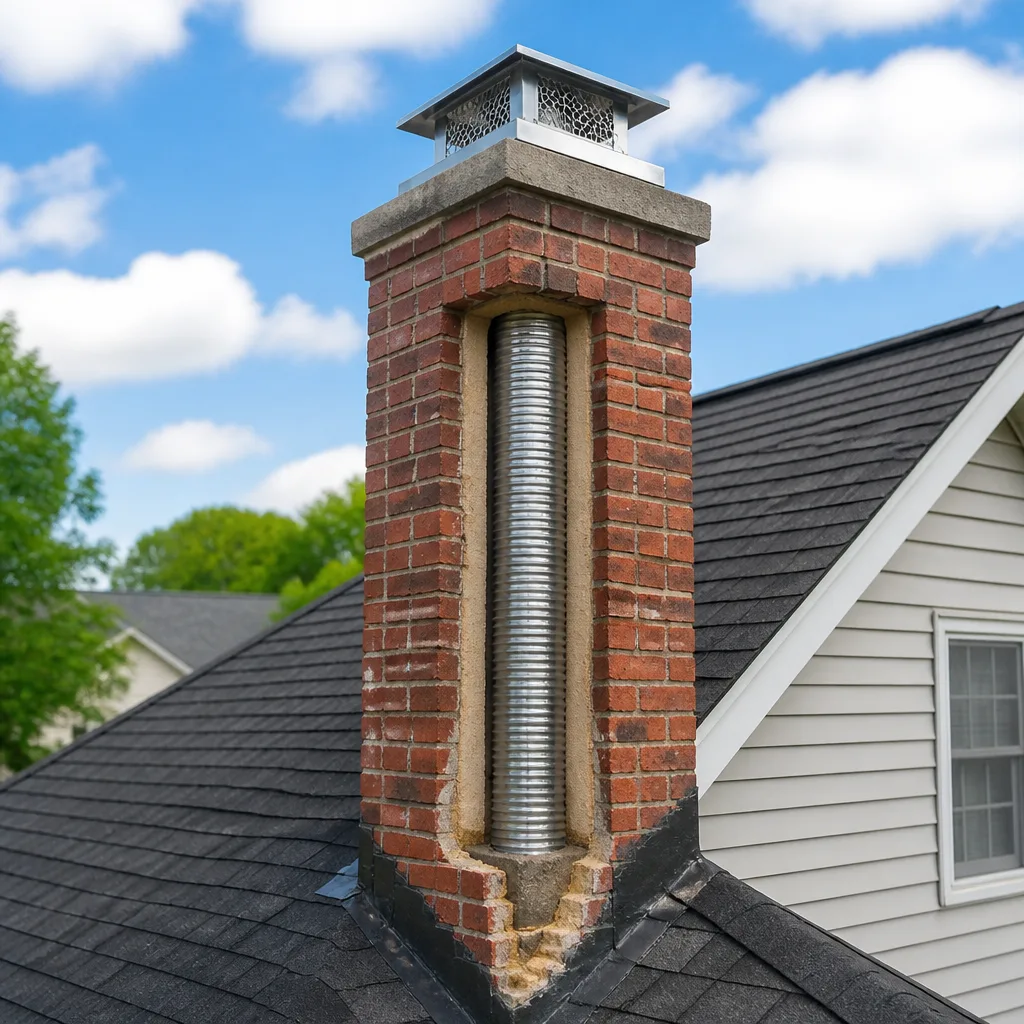
Warranties work the same way. If you install a liner or have repair work done, the warranty usually depends on proper installation and ongoing maintenance by qualified technicians. A DIY repair can void a manufacturer’s warranty on the liner itself. When we install a DuraFlex flexible liner, the durability of the system depends on it being installed and maintained to spec – not just connected.
Documentation is the quiet value of professional service. A written report with photos tells your insurer, your buyer, and your future self exactly what condition the chimney was in and when.
Decision Matrix: Which Category Are You In?
Here’s the practical part. Use these four factors to decide whether you’re in the “DIY is reasonable” category or the “call a professional” category.
Frequency of use. A fireplace used a few times a year builds creosote slowly. A fireplace used most evenings through the heating season builds it fast. The more you burn, the sooner you need a professional inspection – not just a brushing.
Appliance type. Wood-burning fireplaces and inserts build creosote. Gas inserts build less, but still need annual checking for corrosion and venting issues. Each appliance type has its own risks, and gas appliances carry carbon monoxide concerns that require proper venting verification.
Chimney age and construction. A newer chimney with a modern liner is more forgiving. An older masonry chimney with unlined or clay-tile flues needs closer professional attention. In Nampa, a lot of homes were built in the last few decades, but older stock exists too, and older chimneys often hide problems behind the brick.
Last professional inspection date. If you’ve never had one, or it’s been more than a couple of years, that’s your answer. Book an inspection first. Everything else follows from what the camera finds.
If you want a simple rule: DIY sweeping is reasonable for a homeowner with a newer, well-maintained chimney who has had a recent professional inspection and knows what condition the flue is in. Everyone else should start with a professional.
Nampa Climate and Your Chimney
Nampa’s heating season runs long – often from October well into March – and the swings between cold nights and mild days matter to your chimney. Wood smoke that cools too quickly in the flue leaves more creosote behind. That’s why a properly sized flue, correct draft, and regular cleaning all work together.
The dry summers and freeze-thaw cycles in winter also stress the exterior masonry. Moisture gets into brick and mortar, then expands when it freezes, and the crown and mortar joints take the worst of it. That’s why the ground-level inspection matters every season in Nampa. Small cracks that go unnoticed in fall become bigger problems by spring.
Our technicians have up to 9 years of experience working in the Treasure Valley, and we know what a neglected Nampa chimney typically looks like after a heavy burn season. If you’re looking for a chimney sweep in Nampa, the right time to book is before the heating season starts, not after the first cold snap.
Tools and Technique: What Proper DIY Looks Like
If you’re going to do the brushing yourself, do it properly. Here’s what a competent DIY sweep involves.
- Set up containment first. Lay drop cloths over the hearth and surrounding floor. Seal the fireplace opening with plastic sheeting and painter’s tape, leaving a small access point for the brush.
- Match the brush to the flue. A round brush for a round flue, a square brush for a square one. Undersized brushes miss the corners. Oversized brushes can damage the liner.
- Work from the top down. Climb to the roof (only if you’re comfortable with heights and your roof surface is safe to walk), remove the cap, and work the brush down through the flue in short strokes. Or work from the bottom up using rods inserted through the firebox.
- Use the right vacuum. A standard shop vac will throw fine soot back into the room. Use a HEPA-rated vacuum or one designed for chimney work.
- Wear protection. A fitted respirator, safety glasses, and gloves are not optional. Creosote and soot are both respiratory irritants.
- Inspect as you go. Shine a strong light up the flue from the firebox. Look for cracked tiles, gaps, and heavy deposits. If you find any, stop and call a professional.
- Clean up carefully. Bag the debris, wipe down surfaces, and check for soot settling in the room before you put the furniture back.
If any step feels uncertain – especially the roof work or the flue inspection – that’s a sign to bring in a professional. Roof work on a steep pitch is genuinely dangerous, and a fall is a worse outcome than an expensive sweep.
Common Mistakes to Avoid
- Brushing without a camera inspection. You can’t see a cracked liner, a disconnected flue tile, or glazed creosote from the firebox. A brushing without an inspection is a guess.
- Skipping containment. A chimney cleaning without proper containment spreads fine soot through the room. Once it settles into carpet and upholstery, it’s hard to remove.
- Assuming a gas fireplace needs no servicing. Gas appliances still have venting systems that corrode and need checking. Carbon monoxide is the risk here, not creosote.
- Ignoring the dryer vent. Clogged dryer vents are a major cause of residential fires, and they’re often overlooked because the vent is behind the appliance. Both the chimney and the dryer vent are exhaust systems that need regular attention.
- Waiting until the first cold snap. In Nampa, sweep appointments fill up quickly when the weather turns. Book before the burn season, not after.
- Treating a sweep as a one-time task. Chimneys need annual attention, not a single cleaning and then a decade of neglect.
- Assuming a DIY cleaning satisfies your insurer or home inspector. Many policies and inspections want documentation from a qualified professional. A homemade sweep doesn’t produce that.
When to Call a Professional
Call a professional if any of the following applies: you’ve never had a camera inspection, you burn wood regularly through the winter, your chimney is older masonry, you’ve noticed creosote buildup beyond light soot, the cap or crown is damaged, you’re selling or buying a home, or an insurer has asked for documentation. Call a professional before you light the first fire of the season if the chimney hasn’t been checked in more than a year. Call a professional if you find Stage 2 or Stage 3 creosote – that’s not a job for a brush and a shop vac.
Chimney Sweep Nampa offers free estimates in Nampa. Call (888) 854-6163. We answer 24/7. Fast dispatch from 7am to 7pm, Sunday through Friday. We’re closed Saturday.
Frequently Asked Questions
A routine chimney sweep in Nampa usually costs less than a full inspection with a camera report, and the exact price depends on your appliance type, flue condition, and whether repairs are needed. We set the price per job by written estimate, and the estimate is free. Call (888) 854-6163 for an exact quote.
Only if the camera inspection shows the existing liner is cracked, disconnected, or deteriorated to the point it can’t safely contain heat and gases. Many chimneys don’t need a liner replacement. HeatShield ceramic resurfacing can sometimes restore a flue interior without a full reline, and we’ll tell you which option fits your chimney after we see what’s inside it. Call (888) 854-6163 to book an inspection.
Once a year for most wood-burning homes, and more often if you burn heavily through the long Nampa heating season. Gas appliances should still be checked annually for venting and corrosion. Annual service is the baseline, not a suggestion.
Creosote builds up inside the flue, and Stage 2 or Stage 3 deposits can ignite. A chimney fire can spread to the framing of the house. Carbon monoxide can also build up if the venting is compromised. Skipping the sweep doesn’t cause a problem immediately – it just means you won’t know about one until it’s serious. Call (888) 854-6163 for an inspection.
Possibly, but check your policy. Many insurers want documentation of professional inspection and maintenance, and a DIY cleaning doesn’t produce that record. Call your agent to ask what your policy requires, then book a professional inspection if documentation is needed.
Yes. Clogged dryer vents are a fire risk, and they’re often overlooked. We handle dryer vent cleaning alongside chimney service, so both of your home’s major exhaust systems get checked. Call (888) 854-6163 to schedule.
We use professional-grade components from DuraFlex, HeatShield, Gelco, and Olympia Chimney. Those are the brands specified by chimney professionals, not generic or unbranded supplies. Call (888) 854-6163 to discuss which is right for your chimney.
The Bottom Line
DIY chimney cleaning is a reasonable option for a careful homeowner with a newer, well-maintained chimney who knows its condition. It’s a bad option for anyone who hasn’t had a camera inspection, who burns heavily through the winter, or whose chimney is older or shows any signs of deterioration. The dividing line is visibility: you can’t fix what you can’t see, and you can’t prove what you cleaned without a report. For Nampa homeowners, the smartest move is a professional inspection first, then decide what you can safely handle yourself. Call (888) 854-6163 for a free estimate. We answer 24/7. Fast dispatch from 7am to 7pm, Sunday through Friday, and we’re closed Saturday.
Written by the team at Chimney Sweep Nampa.
See the difference
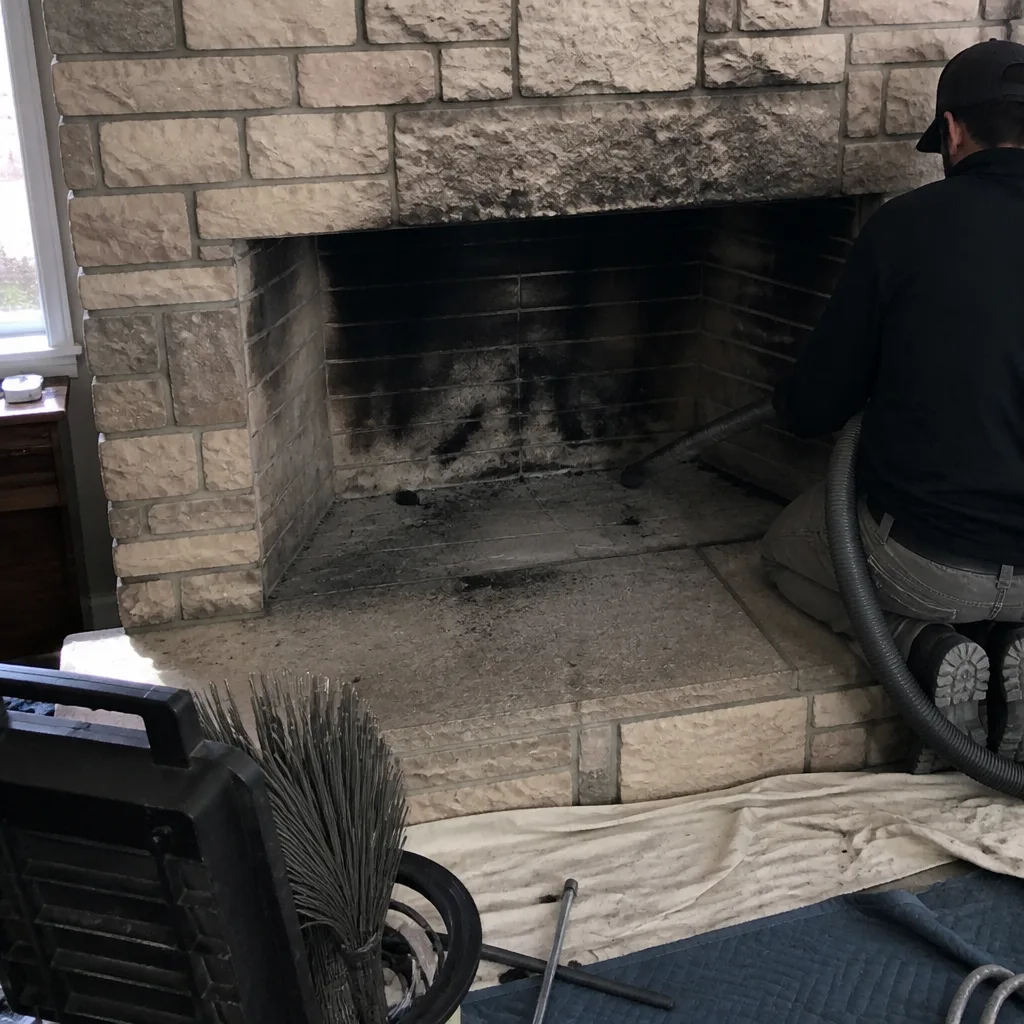 Before
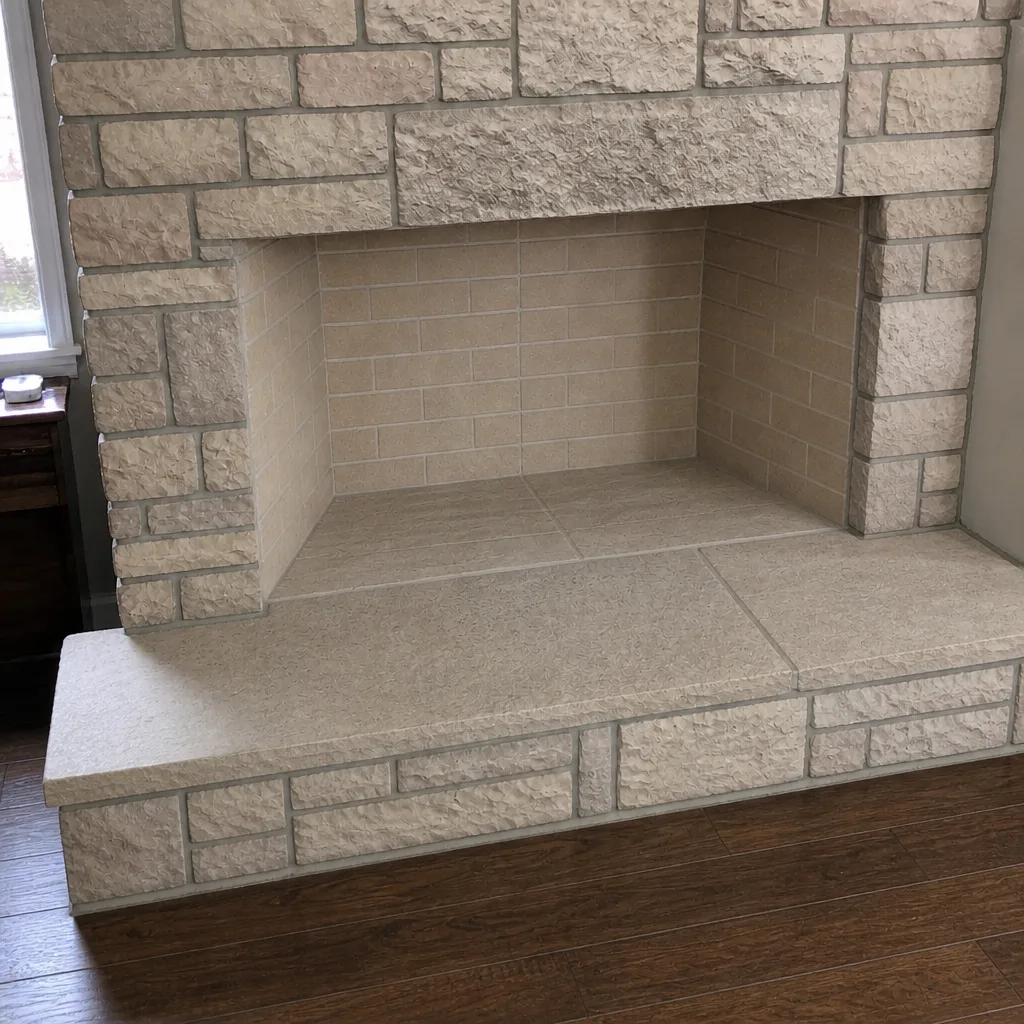 After
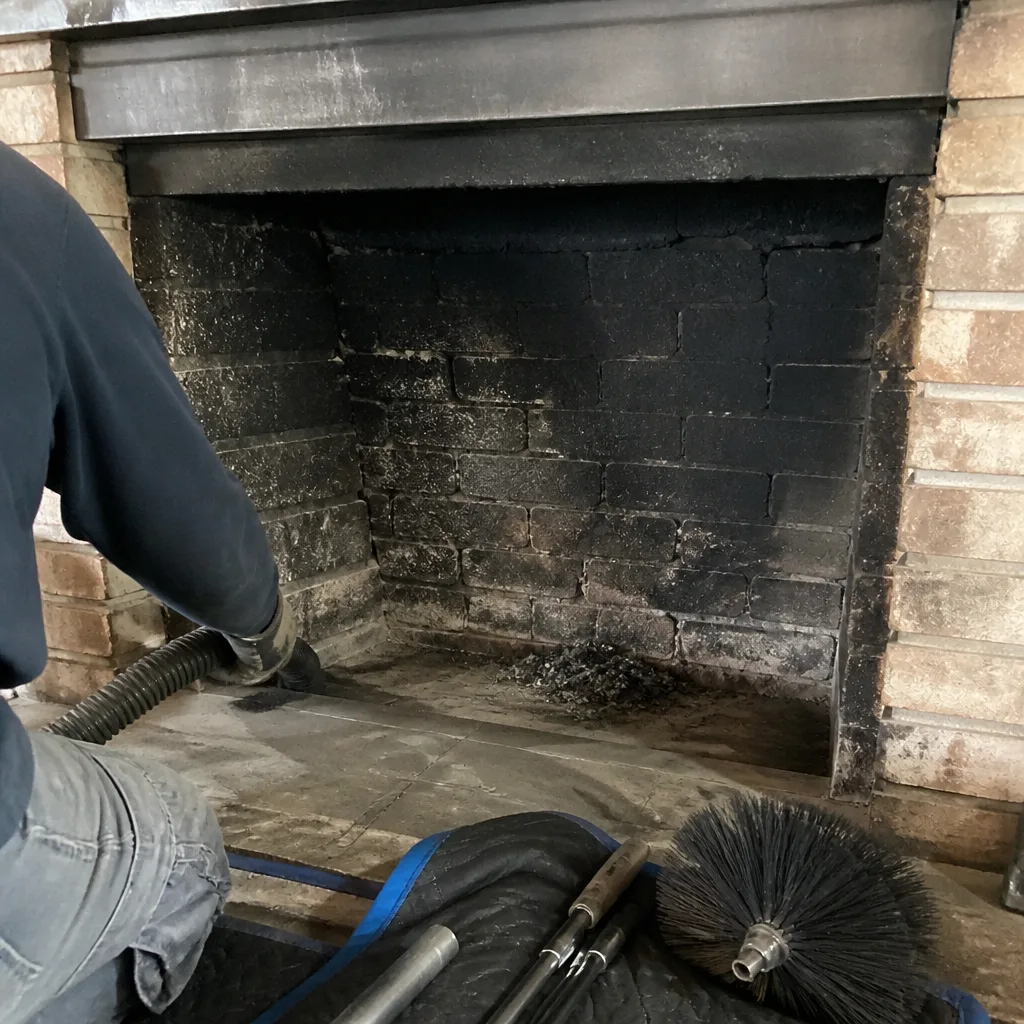 Before
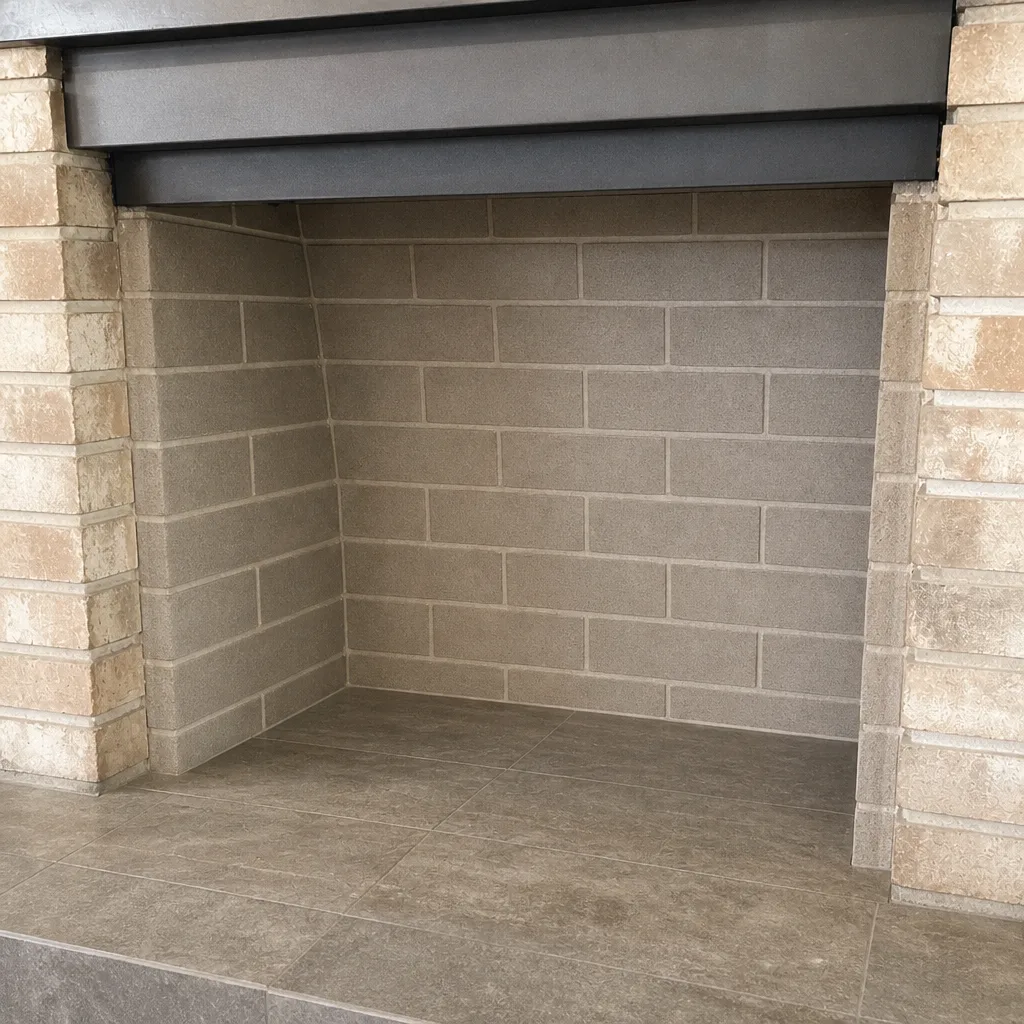 After
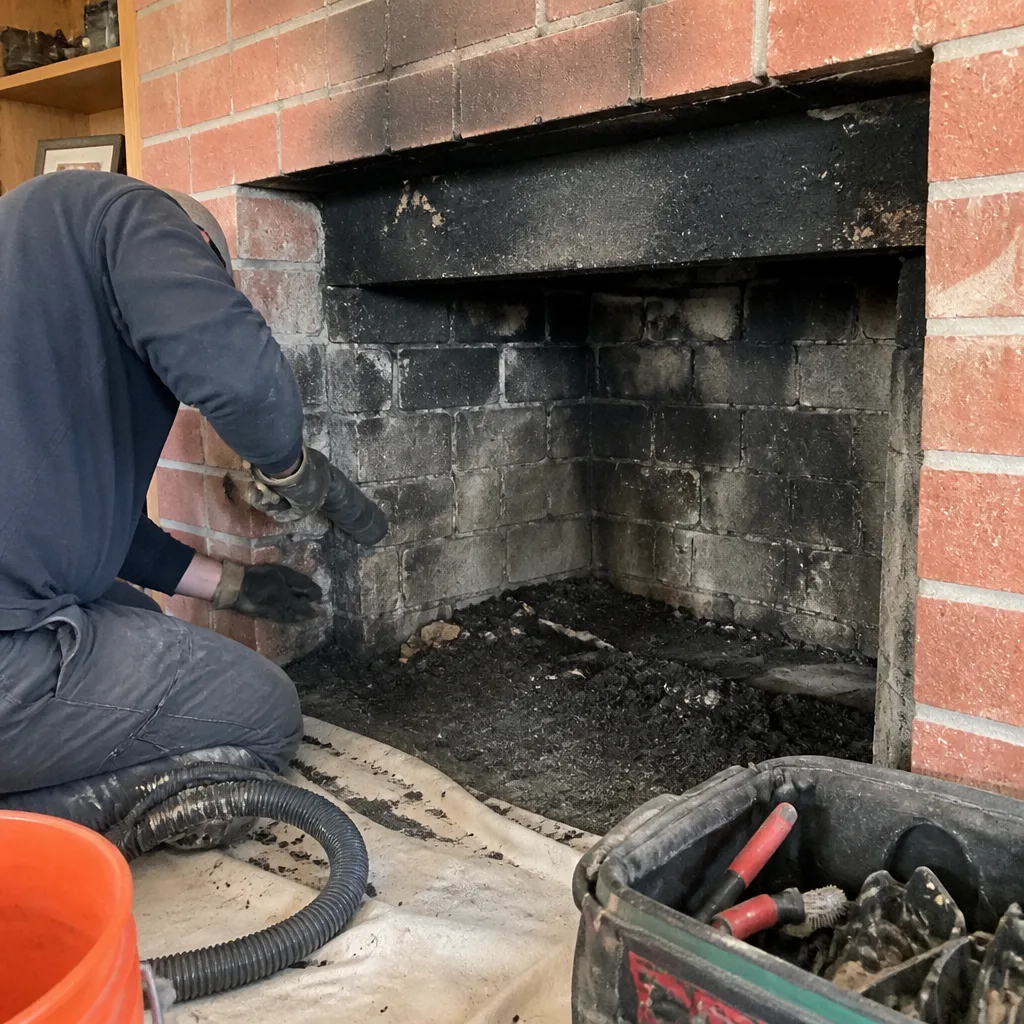 Before
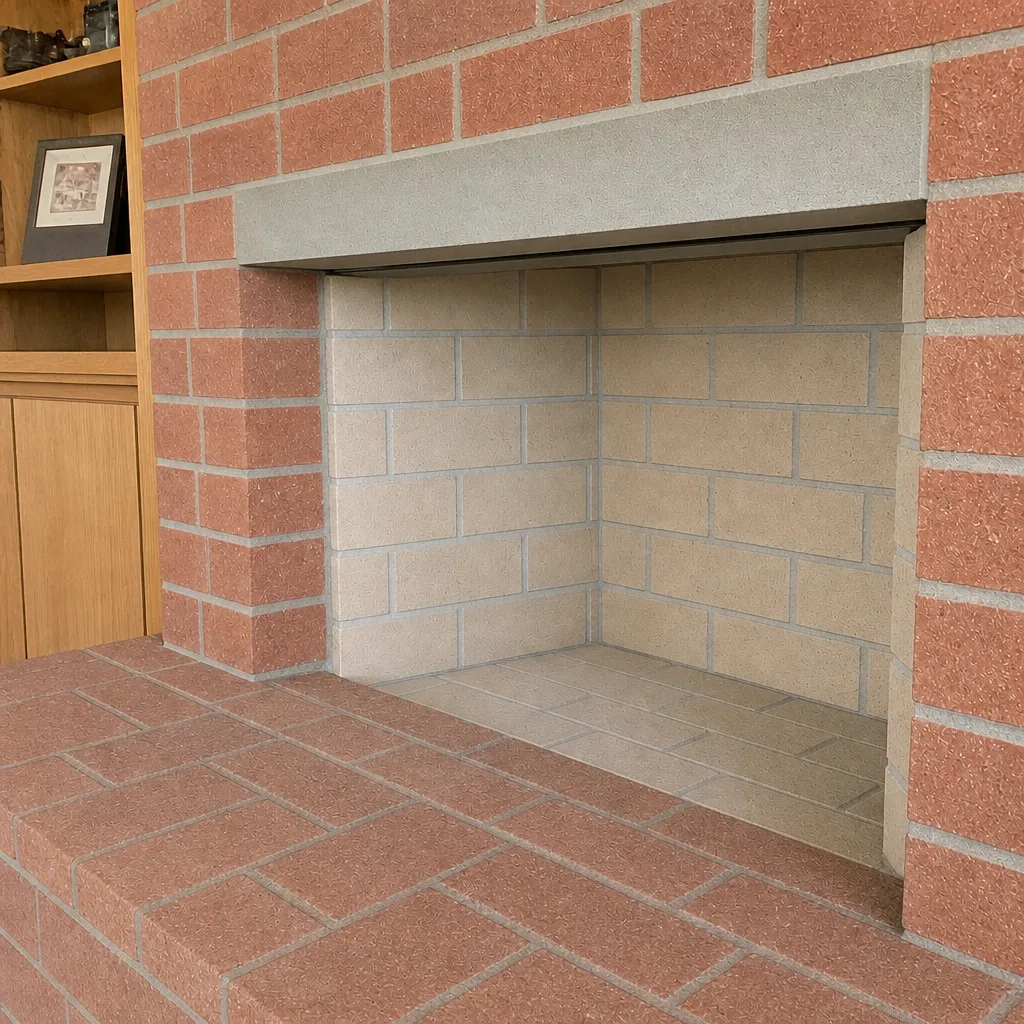 After