
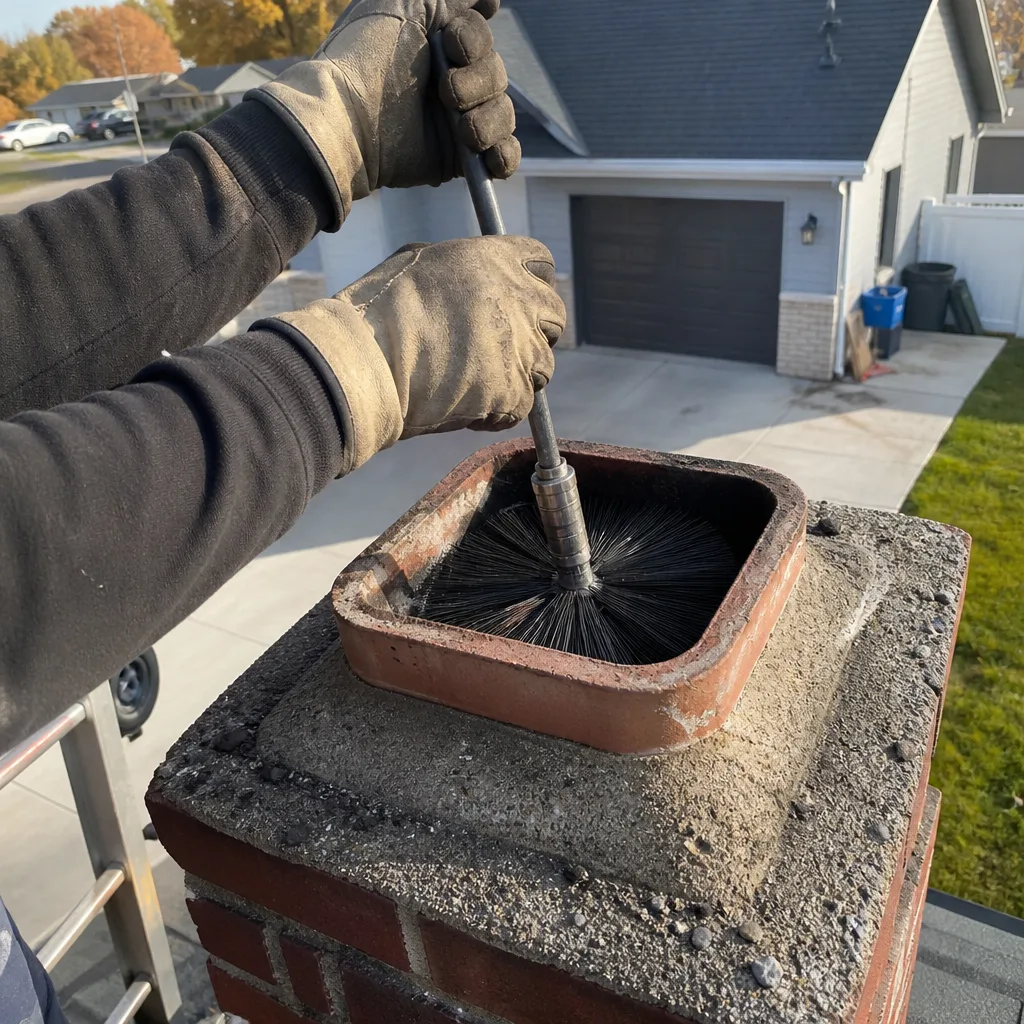
Last updated November 15, 2026
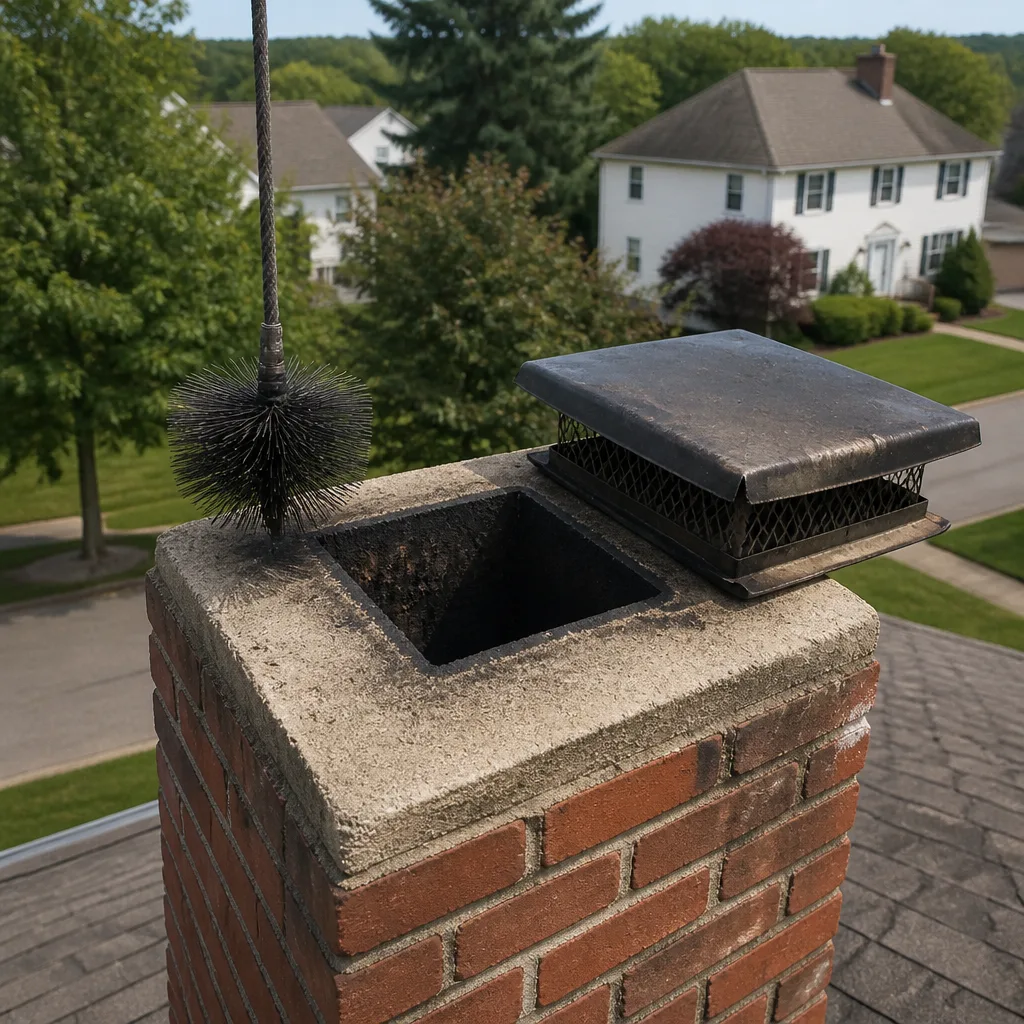 Sweep & inspection
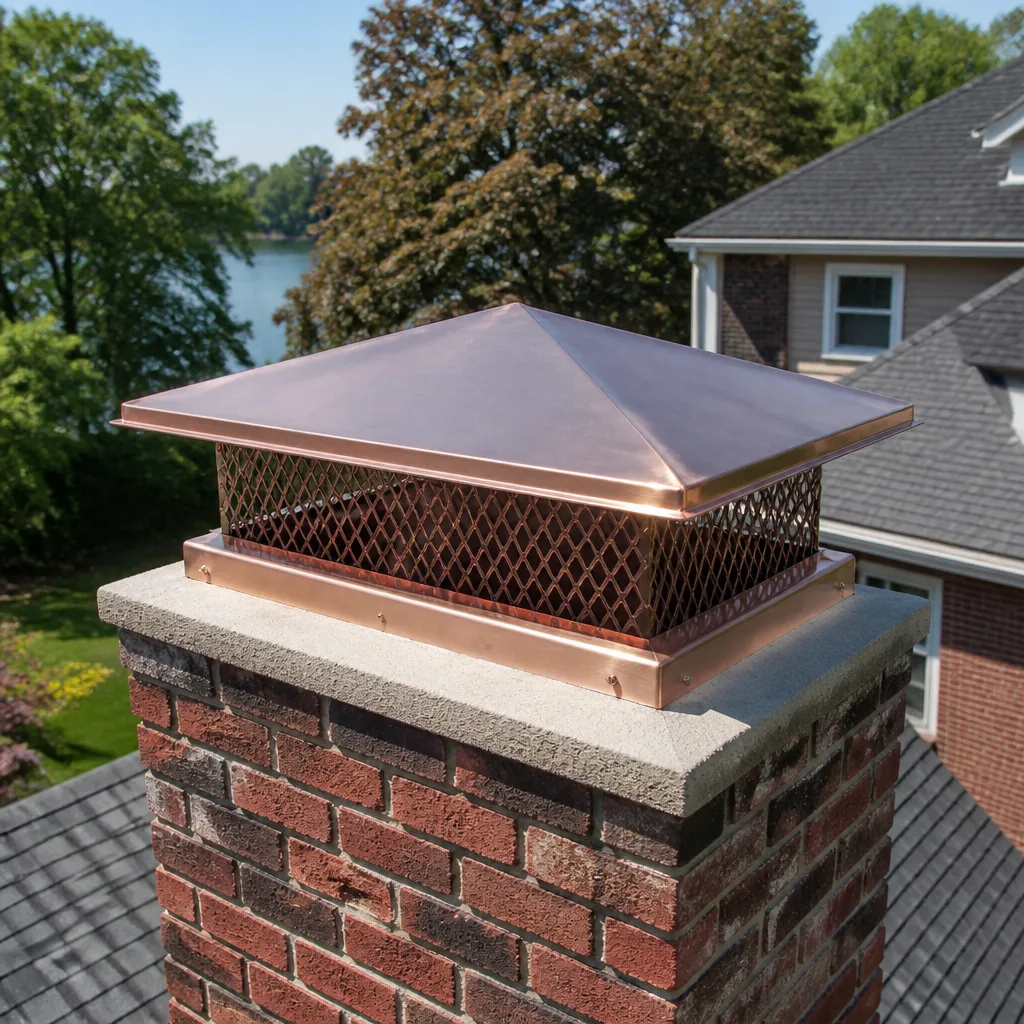 Caps & crowns
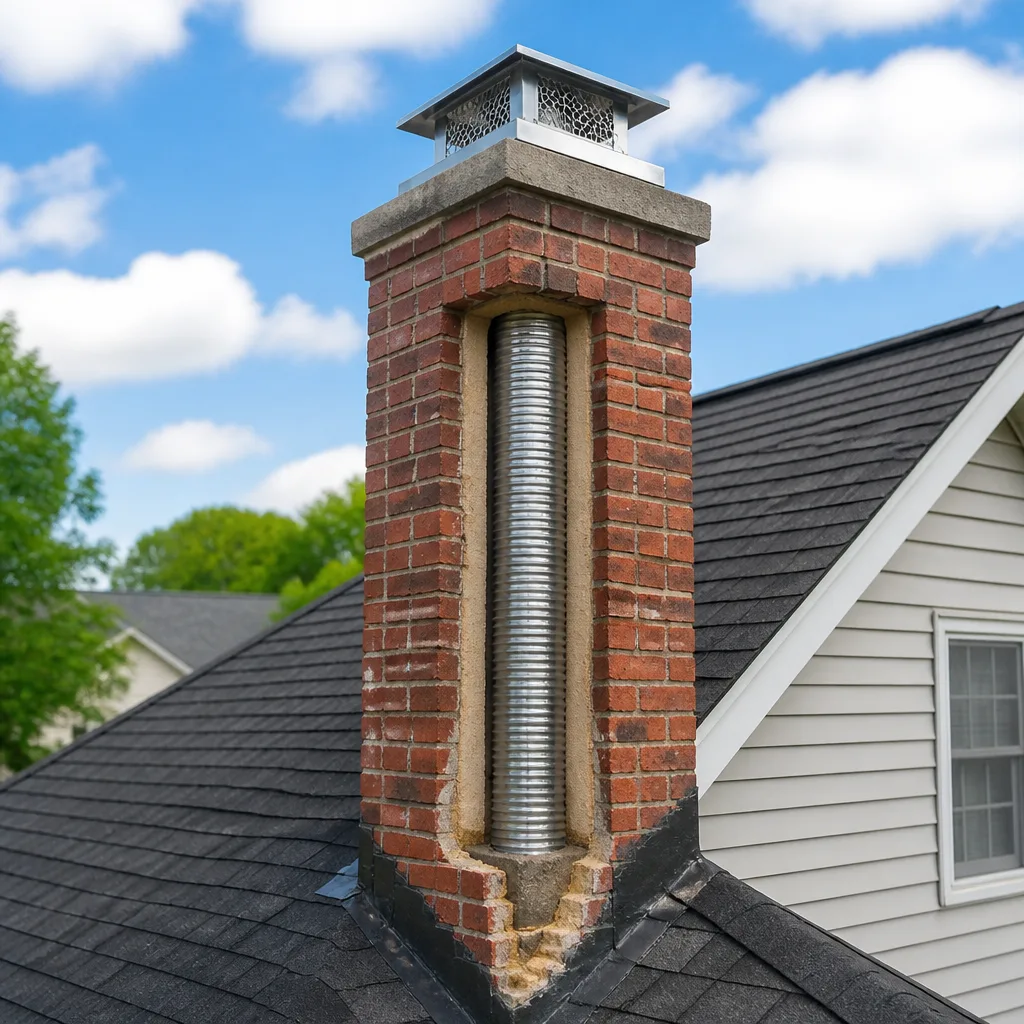 Flue relining
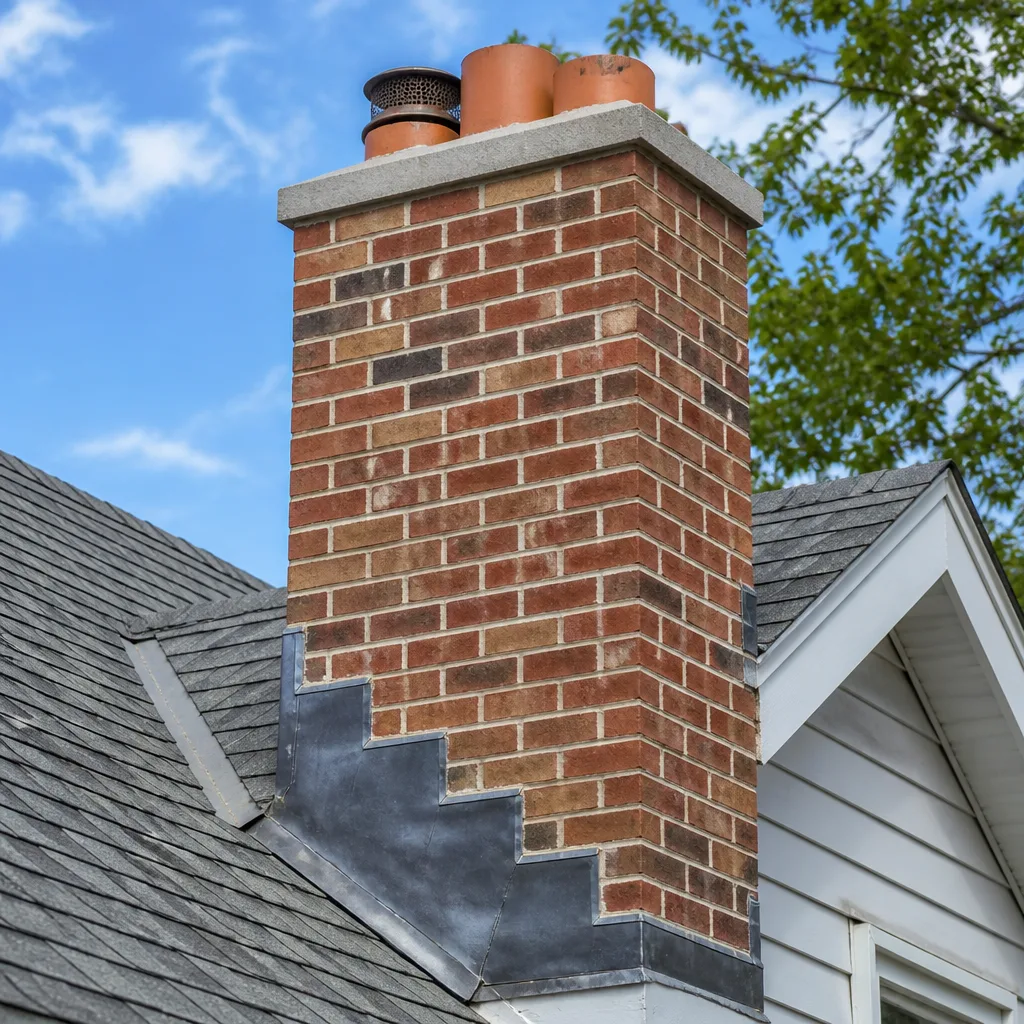 Masonry repair
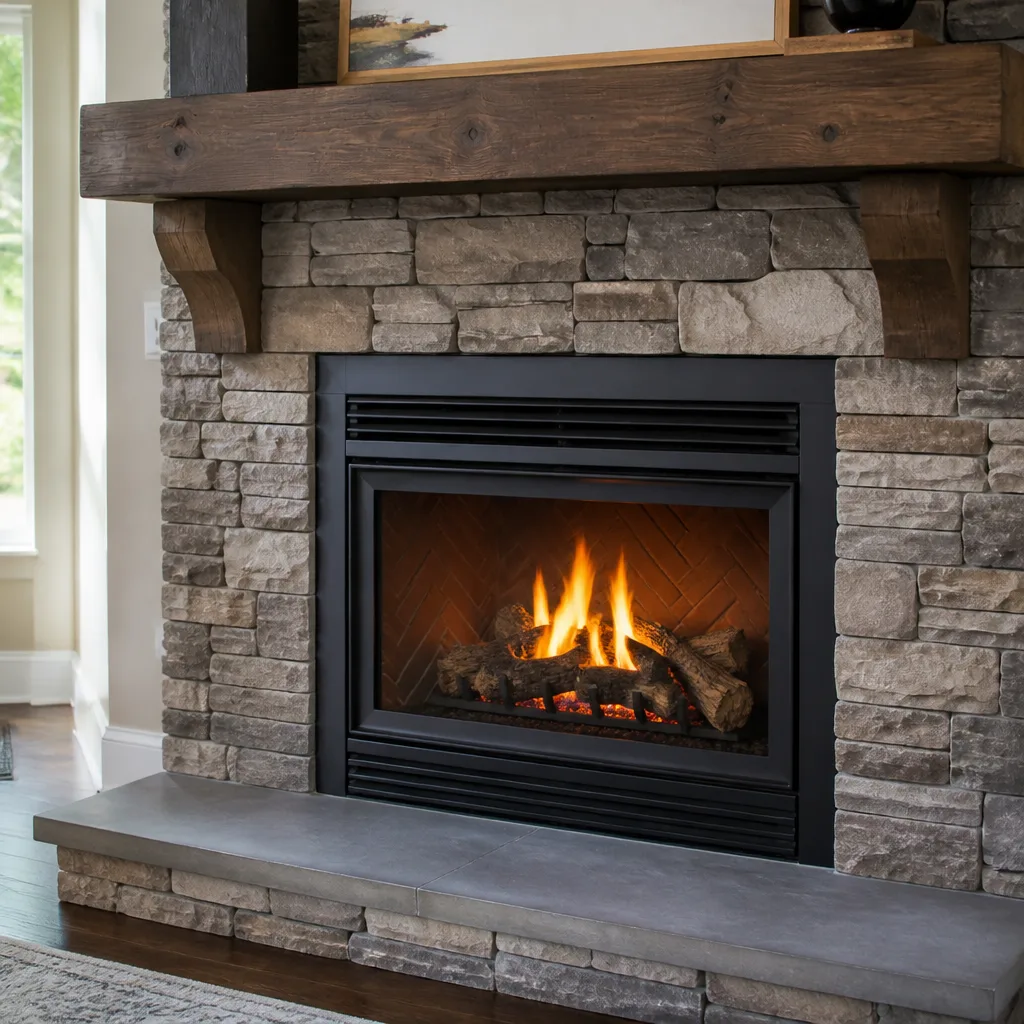 Gas fireplace service
Level 1 sweep and inspection to the NFPA 211 annual standard - flue, crown, cap, and flashing checked and photographed
Chimney sweep logs do not sweep chimneys. They loosen some creosote - which then falls where a brush and vacuum still have to collect it.
Chimney Cleaning Warning Signs: A Nampa Homeowner’s Reference Guide
A white stain on your brick isn’t just an eyesore. It’s your chimney telling you water is moving through the masonry, and by the time it’s visible outside, it’s already been working from the inside. Most homeowners in Nampa don’t ignore their chimney out of carelessness. They ignore it because nobody ever told them which signals are cosmetic, which mean “schedule service,” and which mean “stop burning and call someone today.” This guide gives you that triage system in plain language, built around the failures we actually see on chimneys in the Treasure Valley. You’ll learn the seven warning signs that matter most here, how to read them without being a mason, and when a smoky smell is a bigger deal than it looks.
Quick Answer
Chimney warning signs fall into three tiers: cosmetic signs (efflorescence, minor settling cracks) that you monitor, functional signs (rusted dampers, drafting problems, summer odors) that mean you should schedule a chimney sweep, and urgent signs (spalling brick, cracked crowns, ceiling stains, CO detector trips) that mean stop using the fireplace and call a professional. In Nampa’s high-desert climate, the freeze-thaw cycle and dry summers make water damage and creosote buildup the two most common culprits. If you can’t tell which tier a sign belongs to, that alone is a reason to have the chimney looked at.
Styles & brands we work with
- Sweep & inspection
- Caps & crowns
- Flue relining
- Masonry repair
- Gas fireplace service
Table of Contents
- The Three-Tier Warning System
- The Seven Warning Signs Nampa Homeowners See Most
- Why a Smoky Smell in July Is More Serious Than It Seems
- Settling Cracks vs. Structural Cracks: Telling Them Apart
- Warning Signs That Show Up Inside the Home First
- Creosote, Drafting, and Nampa’s Burn Season
- What a Professional Inspection Actually Reveals
- Common Mistakes to Avoid
The Three-Tier Warning System
The single biggest reason chimney problems get worse is that homeowners have no framework for deciding whether a symptom is urgent. A rusted damper and a cracked crown both look like “something’s wrong with the chimney,” but they sit on opposite ends of the response scale. Here’s how to sort what you’re seeing.
Tier 1: Cosmetic – Monitor
These signs suggest moisture is present but hasn’t caused structural failure.
- Light, powdery white staining on the outer brick (efflorescence)
- Hairline cracks in the firebox mortar
- Minor rust flakes on the damper that still opens and closes smoothly
- Small chips in exterior mortar joints
None of these require a same-week call. But they do require a plan. Cosmetic signs left alone for several seasons are exactly how a Nampa chimney moves into Tier 2.
Tier 2: Functional – Schedule Service
The chimney still works, but it isn’t performing the way it should. These signs mean you should book a Chimney Sweep Nampa appointment and stop putting it off.
- A damper that sticks, won’t seat, or is visibly warped and rusted
- Smoke rolling into the room when you first light a fire
- A smoky, campfire-like odor in the house during summer
- Staining above the firebox or on the firebox face
- Visible creosote buildup on the flue walls (you can sometimes see it looking up with a flashlight)
Tier 3: Urgent – Stop Using, Call Now
These signs mean fire risk or structural failure is already present. Don’t light another fire until someone qualified has looked at the chimney.
- Spalling brick – brick faces flaking, popping, or crumbling off
- A cracked or visibly deteriorated chimney crown
- Ceiling stains, water rings, or discoloration near the chimney chase
- A carbon monoxide detector that has gone off
- Smoke pouring back into the living space with the damper fully open
- Loose bricks, tilting masonry, or visible separation from the house
If you’re reading this list and something in Tier 3 sounds familiar, the rest of this guide will still help you understand what’s happening. But the answer doesn’t change: get it looked at before the next fire.
The Seven Warning Signs Nampa Homeowners See Most
Chimneys fail in fairly predictable ways, but the local climate shapes which failures happen first. Nampa sits in a high desert valley with low humidity for most of the year and a hard freeze-thaw swing in winter. That combination pushes water damage and creosote problems to the front of the line. Here are the seven signs we see most often, with what each one actually tells you.
1. Efflorescence
That chalky white stain on exterior brick isn’t mold and it isn’t salt. It’s mineral deposits left behind when water travels through the masonry and evaporates on the surface. The presence of efflorescence means water has found a path into the brickwork. It’s a Tier 1 sign on its own, but if it keeps returning after a dry season, the source needs to be found.
2. Spalling Brick
Where efflorescence is a warning, spalling is the damage itself. Water enters the brick, freezes, expands, and pops the face of the brick off. Nampa’s freeze-thaw cycle makes this one of the most common masonry failures we’re called out for in winter and early spring. Spalling brick means the moisture problem has moved past the surface and into the brick body. That’s Tier 3.
3. A Rusted Damper
Dampers rust because moisture has been sitting in the flue. A little surface rust is manageable. A damper that won’t fully open or close, or one that’s visibly warped, causes real problems: it lets conditioned air escape year-round and it stops being a reliable barrier against downdrafts. If the damper is failing, the flue is probably due for a cleaning and inspection at the same time.
4. A Smoky Odor in Summer
This sign deserves its own section, but the short version: a chimney that smells like a campfire in the middle of a Nampa summer is not just old smoke. It’s a sign of creosote and moisture interacting in the flue. That combination is a fire risk, and it’s exactly what a seasonal sweep clears out.
5. Staining Above the Firebox
Brown or gray staining at the top of the firebox opening usually means creosote or smoke is escaping where it shouldn’t. Sometimes it’s a damper issue, sometimes it’s poor draft, sometimes it’s a cracked firebox panel. None of those fix themselves by burning more fires.
6. Drafting Problems
A chimney that used to draw fine and now doesn’t, or one that only drafts on cold days, is telling you something has changed inside the flue. Possible causes: a partial blockage, a damaged flue tile, a liner that’s failing, or an obstruction from nesting debris. A professional camera inspection finds the cause quickly instead of guessing at it.
7. A Cracked Crown
The concrete crown at the top of the chimney exists to shed water away from the masonry. Once it cracks, water goes into the flue from the top, which is often where Nampa’s efflorescence and spalling problems actually begin. Crown cracks are easy to miss from the ground. They’re one of the most common findings in a sweep and inspection, and one of the cheapest problems to fix when caught early.
Why a Smoky Smell in July Is More Serious Than It Seems
A lot of homeowners notice a smoky smell in the house in summer and shrug it off as “leftover smell from winter.” The smell is real, and it points at something worth understanding. Creosote, the sticky substance that builds up in a flue when wood doesn’t burn cleanly, holds odor. In winter, the draft carries it up and out. In summer, warm air outside and cooler air inside can reverse that draft. The chimney pulls air downward instead of upward, and that trapped creosote smell comes into the house.
What makes it worth paying attention to is the combination of conditions it signals. A summer smell usually means three things are present at once:
- A meaningful layer of creosote in the flue
- Moisture in the flue from condensation, rain, or humidity swings
- A flue that isn’t drafting cleanly, at least not during warm weather
Those three together are the recipe for a chimney fire. Creosote is combustible, and the version that builds up from slow, cool fires (the kind that happen with a smoky fire, damp wood, or a damper choked down to stretch the burn) is the type that ignites most readily. When creosote is combined with a moisture source, the flue tile itself starts breaking down faster. The cost of a seasonal sweep is small compared to the cost of a liner rebuild, and much smaller than the cost of a chimney fire. A smoky smell in July is your notice to schedule a cleaning before burn season, not after.
Settling Cracks vs. Structural Cracks: Telling Them Apart
Every masonry chimney in Nampa has some cracks. The question is which ones matter. You don’t need to be a mason to make a reasonable call, but you do need to look at where the crack is and how it’s behaving.
Settling cracks are usually hairline, vertical, and located in the mortar joints rather than through the brick itself. Every house settles, and chimneys settle with them. A thin vertical crack in one mortar joint, one that hasn’t widened since you first noticed it, is a monitor-it sign. So is a stair-step crack that runs through mortar joints but stops cleanly.
Structural cracks are the ones that suggest the chimney is moving or has lost integrity. Look for these:
- Vertical cracks wider than about the thickness of a nickel, or any crack that’s visibly widening over time
- Horizontal cracks – masonry chimneys are almost never supposed to crack horizontally; when they do, it’s often at a mortar joint that’s absorbing movement
- Cracks running through the brick itself rather than the joint between brick
- Visible tilt or lean in the chimney as seen from the yard
- Separation between the chimney and the house wall
- Staining or rust streaks near the crack, which suggests water has been getting in and the crack is long-standing
Nampa’s clay soils and winter freeze-thaw combine to make foundation movement and chimney movement more common than in wetter, warmer climates. If any of those structural signs are present, treat it as Tier 3 and stop using the fireplace until a professional evaluates it. A camera inspection plus an exterior look from the roof will tell you whether the chimney needs a crown repair, a liner restoration (HeatShield ceramic resurfacing is often a fit for cracked flue tiles when the structure is still sound), or a full rebuild.
Warning Signs That Show Up Inside the Home First
Not every chimney problem shows on the outside. Some of the most important signals appear indoors, and they tend to be the ones homeowners explain away. Here’s what to watch for.
Ceiling Stains Near the Chimney
A brown or yellowish ring in the ceiling near where the chimney passes through, or on the upstairs wall next to the chase, means water is getting in and traveling down. It’s almost never just a “paint problem.” Common causes include a failed chimney cap, a cracked crown, damaged flashing where the chimney meets the roof, or a flue with no liner or a damaged one. This is a Tier 3 sign, and it’s worth having an inspector trace where the water is entering rather than re-painting over it.
Smoke Blowing Back Into the Room
Backdraft, or smoke rolling into the living space when the fire is lit, is not a normal fireplace behavior. It can come from a blocked flue, a house that’s too tightly sealed for the chimney to pull air, a chimney that’s shorter than code requires, or a flue sizing issue introduced when a wood insert or gas log set was added. Any of those is a legitimately serious condition that can put carbon monoxide into the living space.
A CO Detector That Goes Off
If a carbon monoxide detector has gone off near a fireplace or gas appliance, treat it as urgent. Get everyone out of the house, ventilate, and don’t re-light the appliance until the chimney and venting have been checked by a professional. CO is invisible and it’s the reason venting failures are taken seriously in this trade.
Chimney Odor in the Room
A smell of smoke or creosote that lingers in the room after the fire is out, or shows up in summer, usually means the flue isn’t sealing or the damper isn’t fully closing. Sometimes a chimney cap issue is the whole problem. Sometimes it’s a sign the flue liner is compromised. Either way, it’s worth a professional look.
Creosote, Drafting, and Nampa’s Burn Season
Nampa’s burn season runs long – cold mornings and evenings stretch well into fall and start early in spring. That’s relevant to chimney condition because creosote builds up more when fires burn cool. Cool fires happen when wood is unseasoned, when the fire is choked down to last longer, or when a fire is burned during a mild stretch of weather. The Treasure Valley’s dry climate helps wood season well, but if firewood has been stacked without cover or has been burning before it’s ready, the chimney will show it.
Creosote comes in three recognizable stages, and knowing them helps you understand what a sweep is dealing with:
- Stage 1 – soot and light flaky deposits. Easy to remove with a standard brush. This is where a chimney should be most of the time.
- Stage 2 – hardened, crusty deposits. Requires more aggressive brushing and sometimes chemical treatment.
- Stage 3 – glazed, tar-like creosote. The most flammable stage, and it usually points to a chimney that’s been run hard on cool fires or hasn’t been swept in years. Stage 3 buildup is one of the most common reasons an inspection turns into a repair conversation.
Drafting problems come from a slightly different direction. Nampa’s housing stock includes a fair number of homes with wood inserts added into older fireplaces, and inserts often change the flue sizing needs. A flue that was correctly sized for an open fireplace may be undersized for an insert, which produces smoke roll-out and slow, smoky burns. That’s a functional sign worth scheduling service for, and it’s often resolved by installing a properly sized liner like the DuraFlex flexible liner systems we spec for insert installations.
What a Professional Inspection Actually Reveals
Every warning sign in this guide has a best way to confirm what’s actually happening, and in most cases the answer is: look at it properly. That means a camera inspection of the flue, a visual inspection of the firebox and damper, and an exterior check of the crown, flashing, and masonry.
Here’s what that usually looks like from the homeowner’s side:
- Exterior check first. The technician looks at the crown, the masonry, the flashing, and the cap from the roof to see if there are obvious problems before going inside.
- Firebox and damper check. Opens the damper, checks for warp and rust, looks at the firebox panels and mortar joints.
- Flue camera inspection. The key step. A camera run up the flue shows the actual condition of the liner or tiles, the creosote level, and whether there are blockages.
- Sweep if needed. A professional sweep clears the creosote to the appropriate level for the flue type, then reinspects to confirm the flue is clean.
- Findings review. Everything found gets explained, with photos, so you understand what’s a cosmetic sign, what’s a functional issue, and what isn’t a problem at all.
That last point matters. A chimney inspection shouldn’t feel like a sales pitch. If the flue is fine, the honest answer is that nothing needs to happen right now. If the flue needs a HeatShield restoration or a new liner, you should see the reason in the photos, not just hear about it. Every sweep we run includes that kind of documentation, because “trust us” isn’t good enough when the work involves fire safety or a repair that costs real money.
If your chimney needs repairs beyond a sweep, the materials matter. Our repair work uses professional-grade components from names like HeatShield, DuraFlex, Olympia Chimney, and Copperfield, the same brands professional sweep associations supply to certified technicians. Not every repair needs all of those products, but when a repair uses them, you’re getting materials specifiers and code officials recognize rather than a generic hardware-store substitute.
Common Mistakes to Avoid
Most chimney problems that escalate got there because of one of these mistakes. Each is easy to avoid once you know what to watch for.
- Treating efflorescence as a cosmetic problem. The white staining itself is harmless, but the moisture path that produced it isn’t. If you clean the stain and it comes back, get the water source found rather than just cleaning again.
- Burning unseasoned wood to “use up” a stack. In Nampa’s dry climate wood can season well, but only if it’s been split and stacked for long enough. Wet wood burns cool, coats the flue with creosote fast, and is one of the leading causes of a chimney that needs a sweep every season instead of every other one.
- Assuming a gas fireplace doesn’t need any service. Gas appliances still have venting that can fail or get blocked. A venting problem on a gas appliance is a carbon monoxide risk, not just a performance issue.
- Painting over ceiling stains near the chimney. Stains around the chimney are water evidence. Covering them doesn’t fix the leak, and it may hide a flashing or crown failure that’s been getting worse for a year.
- Hiring a general handyman for chimney repair. Chimney work has its own code requirements, its own materials, and its own failure modes. A repair specialist who carries a proper liner and restoration system (like HeatShield or DuraFlex) will get a different result than a generalist guessing at it.
- Waiting until fall to book a sweep. Late summer and fall is when sweeps get busy. Booking before burn season starts means you’re not stuck waiting when you want to light the first fire of the year.
- Ignoring the dryer vent while you’re at it. Both your chimney and your dryer vent are exhaust systems that build up flammable lint or creosote. NFPA data links clogged dryer vents to thousands of residential fires every year, and pairing dryer vent cleaning with a chimney sweep visit is one of the most efficient ways to close both fire risks in the same appointment.
See the difference
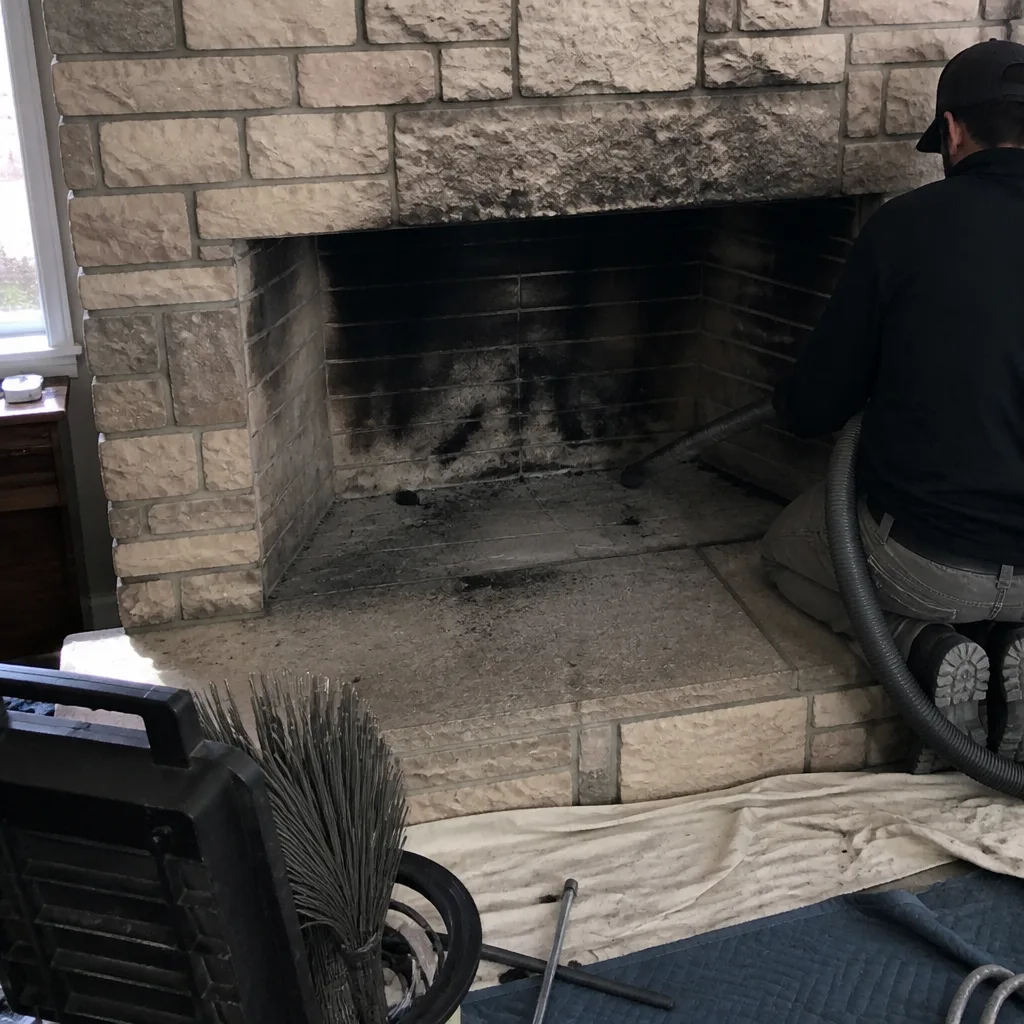 Before
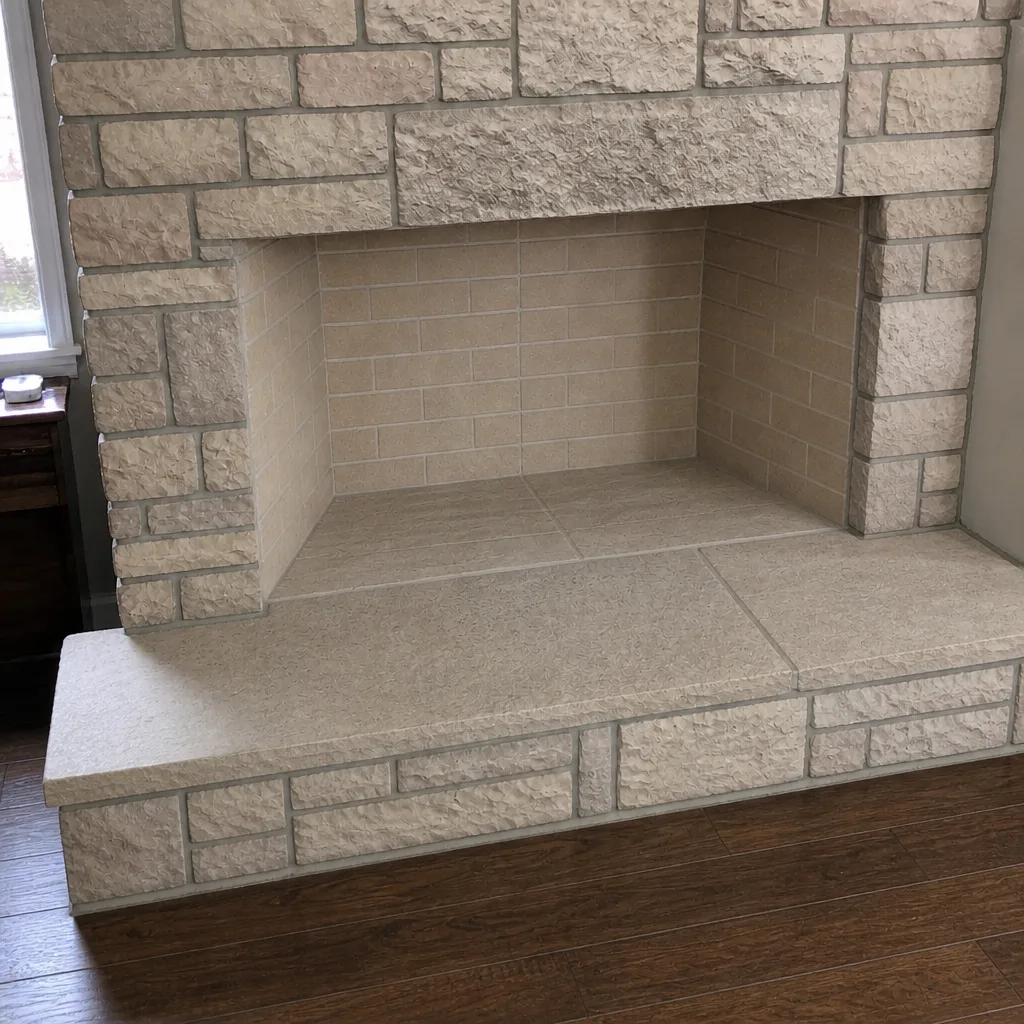 After
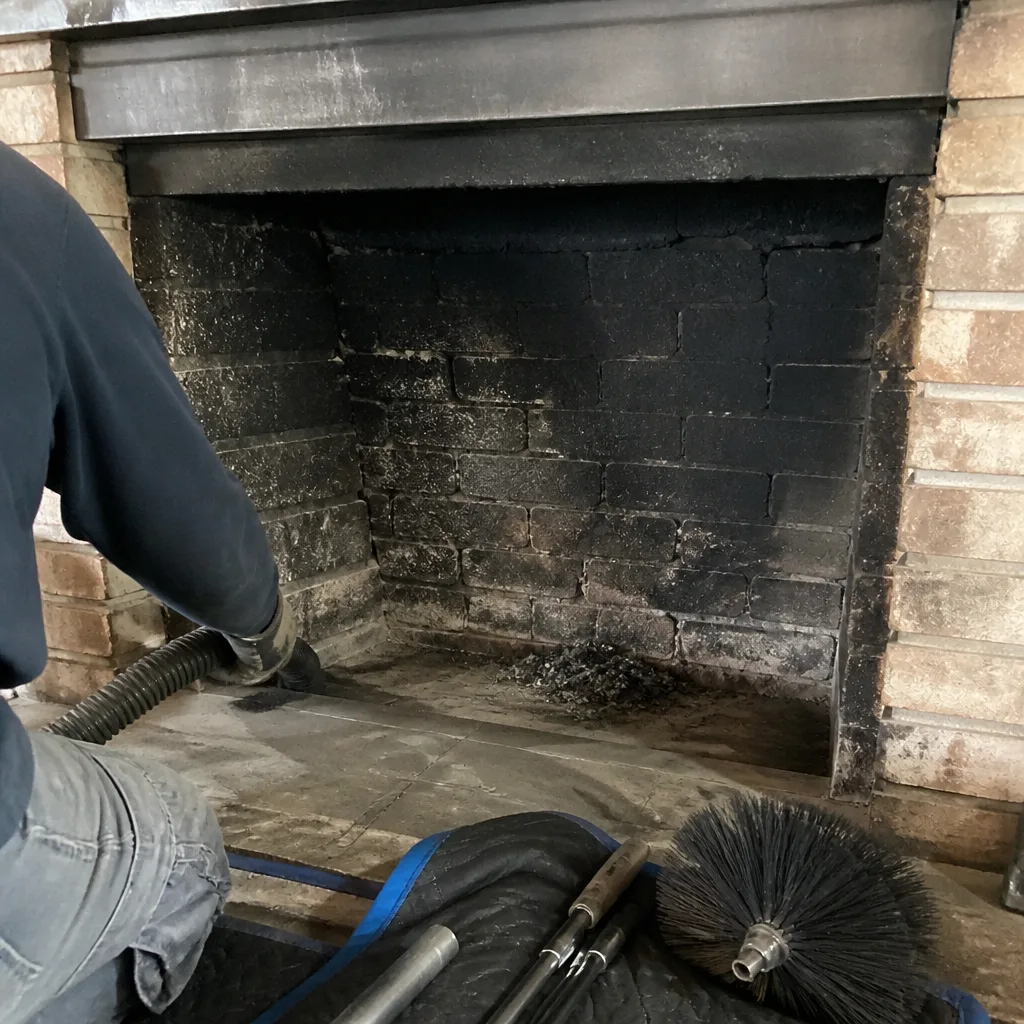 Before
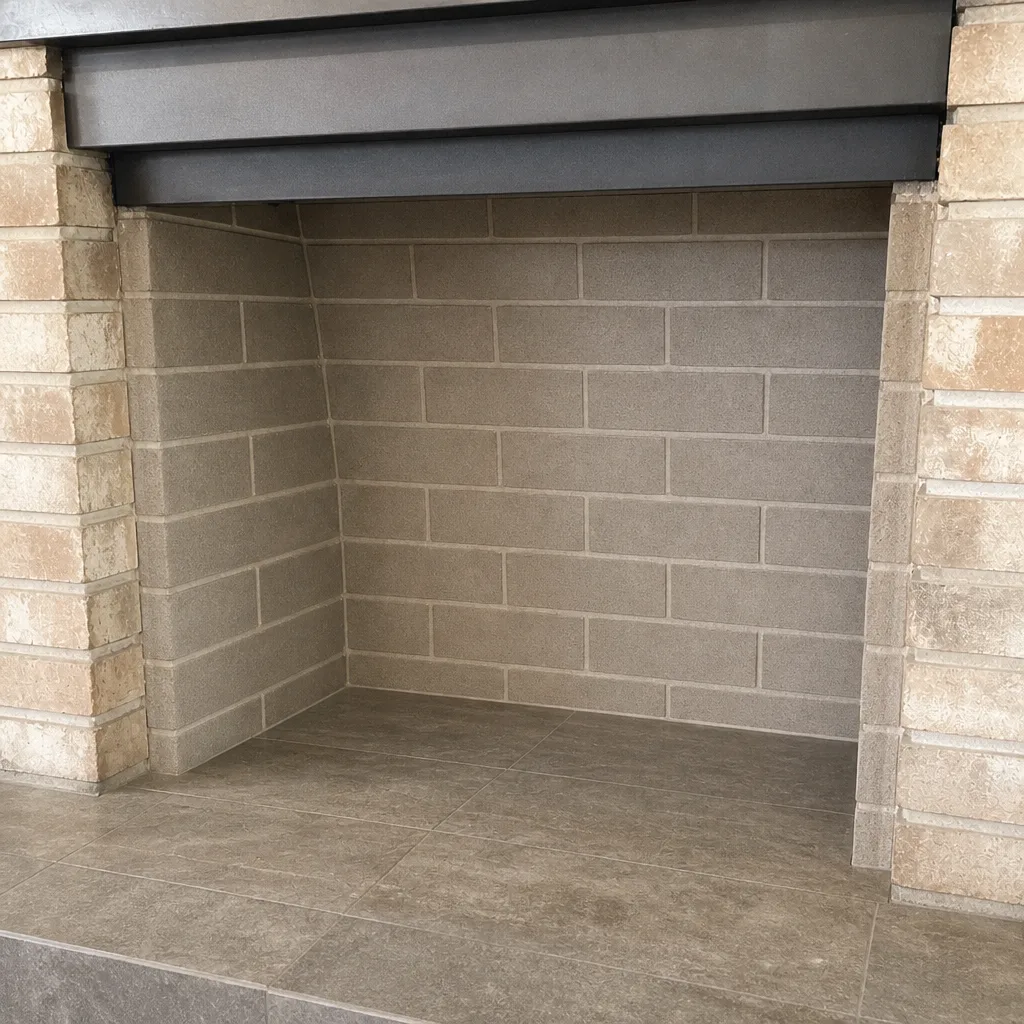 After
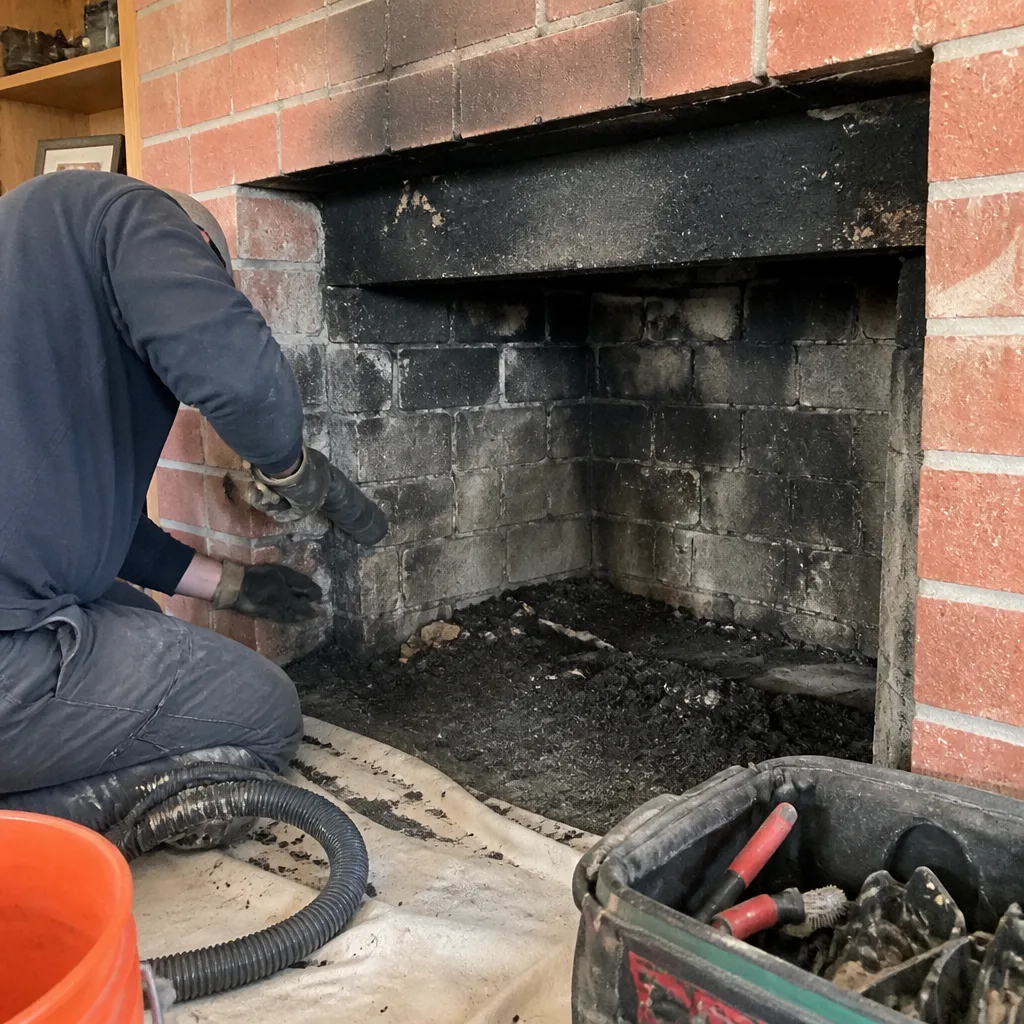 Before
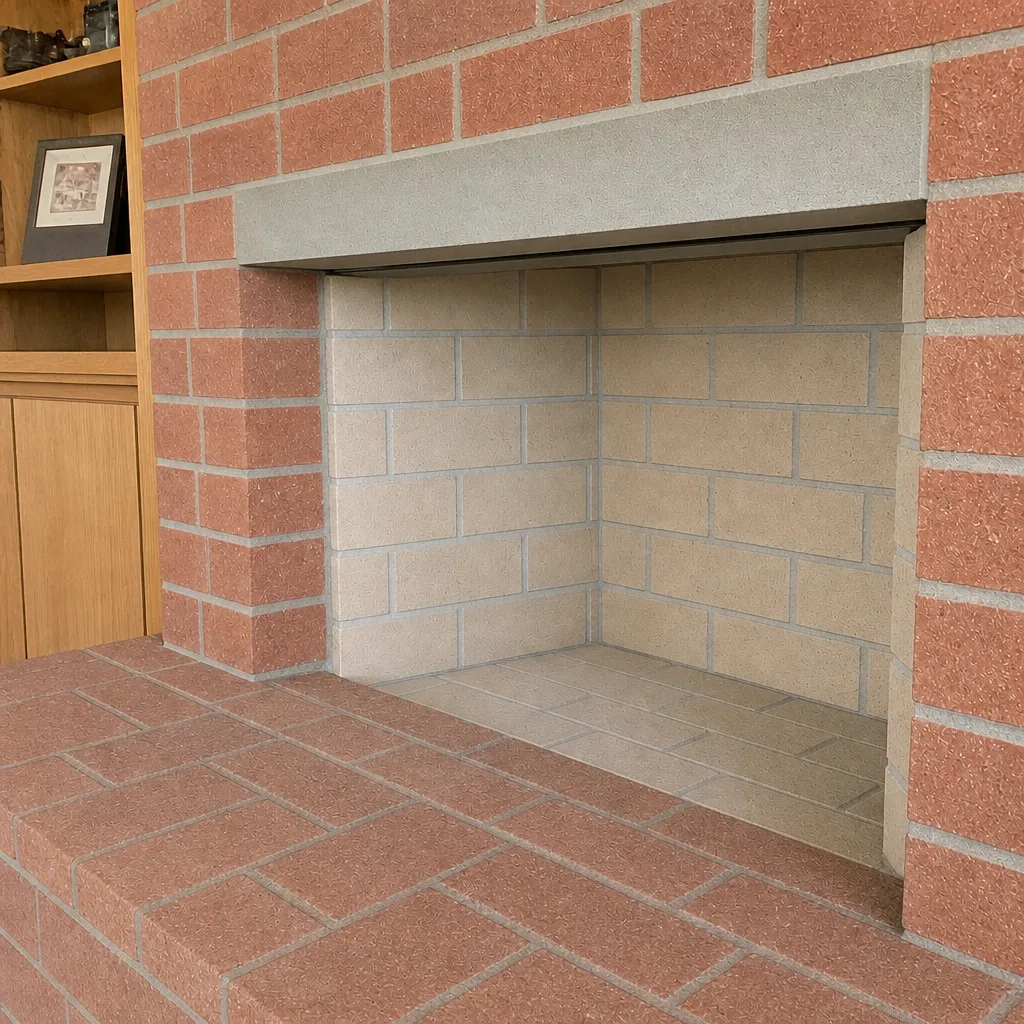 After
When to Call a Professional
Call a professional if you’re seeing spalling brick, a cracked crown, ceiling or wall staining near the chimney, a CO detector trip, backdraft smoke, or a damper that won’t function correctly. Also call if you’ve just moved into a home in the Nampa area and don’t know the last time the chimney was swept, or if the smell in summer has become noticeable enough to be a problem. It’s also a good call if you’ve never had the chimney inspected and you’re planning to start or resume burning.
Chimney Sweep Nampa offers free estimates on chimney sweeps and repairs in Nampa. Every job starts with a camera inspection and a photo record, so you see what we see before anything gets recommended. Call (888) 854-6163. We answer 24/7. Fast dispatch from 7am to 7pm, Sunday through Friday.
Frequently Asked Questions
A chimney should be swept at least once a year if it’s used regularly, and more often if creosote builds up quickly. In practice, the trigger is buildup, not a calendar date. A flue with a quarter inch or more of creosote needs a cleaning regardless of how recently it was last swept, and a home that burns daily during Nampa’s burn season will usually need an annual sweep at minimum. Call (888) 854-6163 to book a sweep and get an exact quote – estimates are free.
It’s a real problem, not just a smell. A summer smoky odor usually means creosote is present in the flue, moisture is combining with it, and the chimney is reverse-drafting in warm weather. That combination raises the fire risk and speeds up liner deterioration. A sweep before fall is the right response. Call (888) 854-6163 for a free estimate.
Hairline vertical cracks in mortar joints that haven’t widened are usually settling cracks and fine to monitor. Cracks that run through the brick body itself, run horizontally, widen over time, or come with a visible tilt or separation from the house are structural and need a professional look. When in doubt, treat it as serious until inspected. Call (888) 854-6163 – estimates are free.
A liner is needed when the flue tiles are cracked, missing, or deteriorated to the point where combustion gases and creosote can reach the masonry behind them. HeatShield ceramic resurfacing can often restore a damaged flue without a full liner replacement, and a flexible liner (like the DuraFlex systems we install) covers cases where resurfacing isn’t possible. Either way, you should see the evidence on camera before agreeing to anything. Call (888) 854-6163 if you want that inspection done and documented.
Yes. Gas appliances rely on proper venting just like wood-burning ones, and a blocked or damaged vent on a gas fireplace is a carbon monoxide hazard. Gas inserts also sometimes need a properly sized liner installed, especially when the insert was added to an older fireplace without updating the flue. An annual inspection confirms the venting is safe. Call (888) 854-6163 to schedule one – estimates are free.
What happens is that creosote keeps building, moisture keeps working on the flue tiles, and a small problem gets bigger. Sometimes the result is drafting problems and smoky fires. Sometimes it’s a repair that turns into a full reline instead of a resurfacing. And in the worst case, it’s a chimney fire. Most Nampa homeowners who skip a year end up paying for it one way or another. Call (888) 854-6163 for a free estimate and get ahead of it.
Yes. Dryer vent cleaning is part of our service scope alongside chimney work, and pairing the two in a single appointment addresses both of the major fire risks in a home at once. It also saves you the trouble of booking two separate contractors. Call (888) 854-6163 for a free estimate on both.
The Bottom Line
Chimney warning signs aren’t all created equal, and the difference between a cosmetic stain and a structural crack is often small from the outside and huge in terms of outcome. The three-tier system in this guide exists so you can sort what you’re seeing into something actionable: monitor it, schedule service, or stop burning and call someone. In Nampa, the signs that matter most are the ones tied to water intrusion (efflorescence, spalling brick, crown cracks) and creosote buildup (summer odors, drafting problems, staining above the firebox). If you’re not sure which tier a sign belongs to, the safe move is the same: have it inspected, see the photos, and get the answer directly. That’s how small problems stay small.
Call (888) 854-6163 for a free estimate. We answer 24/7. Fast dispatch from 7am to 7pm, Sunday through Friday. We tell you what we find, back it with camera evidence, and let you see the chimney before you commit to any work.
Written by the team at Chimney Sweep Nampa.